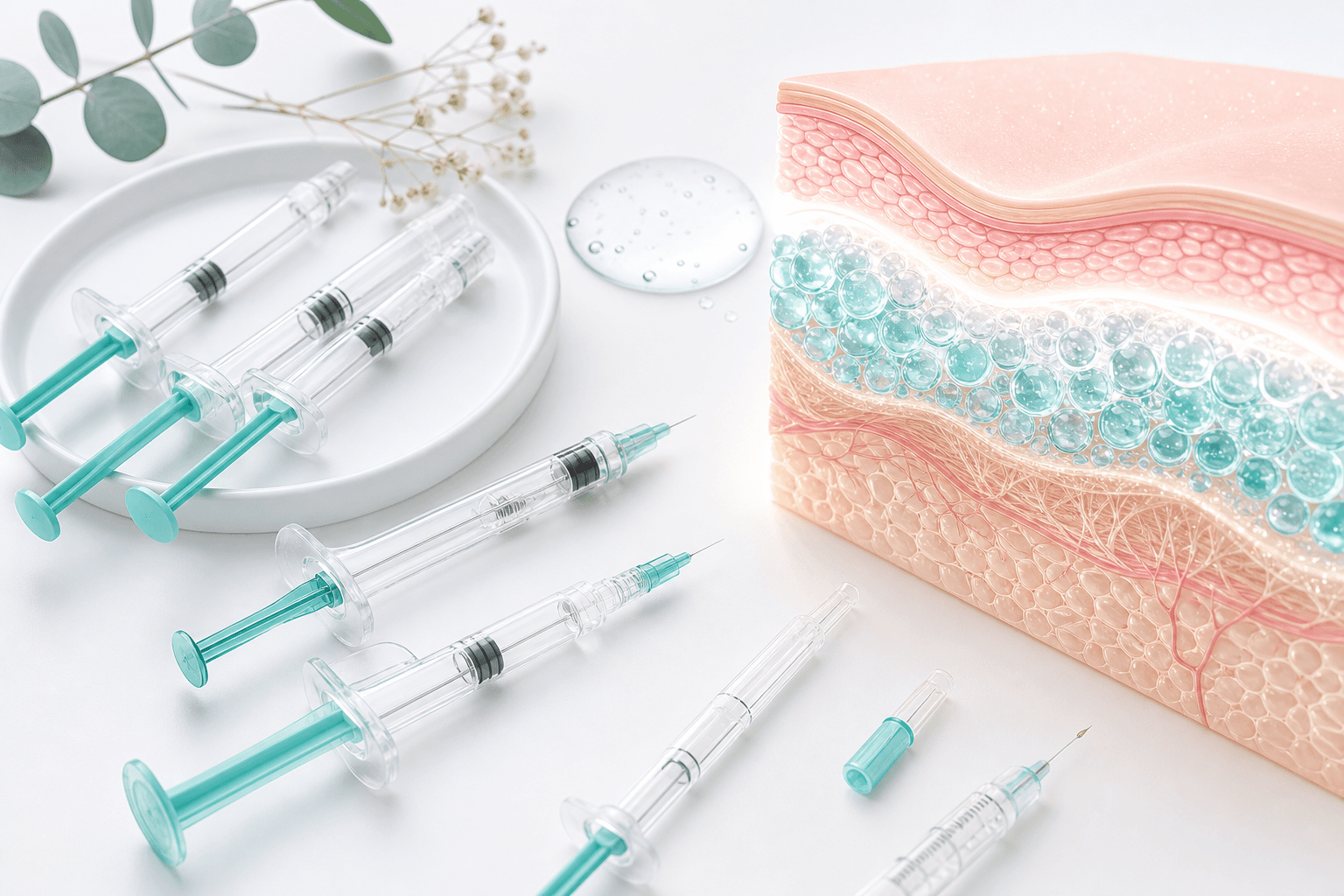
For Those Curious About Klosom
While researching skin boosters, you may have come across the term "exosome." Among them, "Klosom" is frequently mentioned as a stem-cell exosome ingredient — yet when people ask exactly what it contains and what the treatment actually does, clear and well-organized information can be surprisingly hard to find. Moreover, exosomes are treated as a somewhat sensitive area under domestic regulations, so it is important to start by establishing the facts without exaggeration.
In this guide, Dr. Kim Gun-woo, Medical Director of Cellinique on Dosan-daero in Gangnam, walks through how Klosom is consulted on and how the procedure is sequenced in practice, along with the regulations and safety standards you need to know about exosomes. If you are also curious about comparisons with other skin boosters, please see the Rejuran vs. Juvelook Comparison Guide or the Juvelook Comprehensive Guide.

3-Line Summary
1. Klosom is a material marketed as a stem-cell exosome (exosome) type, described by the manufacturer as an exosome-based ingredient derived from stem-cell culture. (It belongs to the exosome category, not the liposome category — this guide follows the exosome classification.)
2. In South Korea, exosomes are largely distributed as cosmetics, and Korea's MFDS revised its cosmetics labeling and advertising guidelines in January 2025 to restrict the use of expressions such as "exosome." For this reason, the principle is to provide conservative guidance rather than making definitive claims about effects or identity.
3. Suitability, perceived effect, and duration of effect vary considerably by skin condition, age, and lifestyle, and identical results cannot be guaranteed for everyone. The specific plan is determined during the pre-treatment consultation.
1. What Is Klosom? The Science Behind Stem-Cell Exosomes
Klosom is a material introduced as a stem-cell exosome (exosome) type. Exosomes are extremely small vesicles secreted by cells, known to carry active substances such as growth factors, cytokines, and certain RNAs and to be involved in cell-to-cell signaling. Klosom is described by the manufacturer as an exosome-based ingredient obtained through the stem-cell culture process.
One key point to note: Klosom is a material classified as the exosome (exosome) type, not liposome. The two terms sound similar, but liposomes are artificially created lipid bilayer delivery vehicles, whereas exosomes are vesicles naturally secreted by cells — a fundamentally different origin. This guide follows the manufacturer's publicly available information and describes it as an exosome.
💡 Fact-check ✓
Source: Manufacturer's official information (EHLBIO Klosome®) · Korea's MFDS (MFDS) Cosmetics Labeling and Advertising Guidelines
- Klosom (Klosome®) is introduced by the manufacturer (EHLBIO) as a stem-cell exosome-based material. (It belongs to the exosome category, not the liposome category.)
- In South Korea, a significant portion of exosomes are distributed as cosmetics. Korea's MFDS revised its Cosmetics Labeling and Advertising Guidelines on 21 January 2025 to restrict the use of potentially misleading expressions such as "exosome" and "exosome cosmetics."
- Therefore, the effects, identity, and mechanism of Klosom are described only at a general information level without definitive claims; results and duration of effect vary between individuals.
That said, the clinical evidence for exosome-related effects has not yet been firmly established by large-scale trials. Academic literature reports that exosomes and stem-cell secretomes may act in the direction of collagen and extracellular matrix (ECM) recovery and anti-inflammation, but most of this evidence is at the preclinical or small-scale preliminary stage, with outstanding challenges around standardization and long-term safety. So rather than expecting "a definitive result in a single session," a realistic assessment of the current evidence is appropriate.
💡 Fact-check ✓
Source: International Journal of Dermatology 2025 literature review (PMC12783422)
- Stem-cell secretomes and exosomes have been reported to potentially act through growth factors (VEGF, HGF, IGF-1, PDGF, etc.) and certain microRNAs in the direction of ECM recovery, fibroblast migration, and anti-inflammation.
- However, current evidence is largely at the preclinical or small-scale preliminary clinical stage, with outstanding challenges including inter-product variability, dose uncertainty, and long-term safety considerations. (No FDA- or EMA-approved products reported.)
- The degree and duration of effects vary between individuals and cannot be guaranteed.
2. Klosom at a Glance
| Item | Information |
|---|---|
| Category | Stem-cell exosome (exosome) type (distinct from liposomes) |
| Manufacturer information | EHLBIO Klosome® — introduced as a stem-cell exosome-based material (based on publicly disclosed manufacturer information) |
| Domestic regulations | Most exosomes distributed as cosmetics in South Korea. Korea's MFDS restricted "exosome" expression in cosmetics labeling and advertising as of 2025-01-21 (NOTE: MFDS classification of the specific Klosom product is unconfirmed) |
| Primary mechanism (general information) | Skin texture and elasticity support direction (effects are individual; not yet established by large-scale clinical trials) |
| Anesthesia | Topical (cream) anesthesia (depending on the area and method) |
| Downtime | Generally short, but swelling, redness, and bruising vary considerably between individuals |
| Perceived change pattern | Possibility of gradual changes over several weeks; varies considerably between individuals |
| Recommended frequency and interval | Determined individually during the pre-treatment consultation |
| Consultation and procedure | Dr. Kim Gun-woo, Medical Director — direct consultation and procedure |
| Examples requiring careful review | Pregnancy or breastfeeding, active infection, anticoagulant or immunosuppressant use, autoimmune disease, ingredient allergy, tumor history — assessed during pre-treatment consultation |
※ The above is general information. Whether Klosom-related treatment is appropriate for you, and the specific approach, can only be determined through a pre-treatment consultation. Perceived effect and suitability vary according to individual skin and health condition.
3. Why Must Exosomes Be Addressed Conservatively?
When discussing exosome ingredients such as Klosom, it is above all important not to overstate the effects. There are two key reasons.
First, this is a regulatory gray area. In South Korea, a significant portion of exosomes are distributed as cosmetics — formulations that are not inherently approved for injection use. Korea's MFDS judged in its January 2025 Cosmetics Labeling and Advertising Guidelines that expressions such as "exosome" could cause misunderstanding and restricted their use. It is therefore important to avoid making definitive claims about exosomes such as "stem-cell therapy" or "guaranteed regenerative effects."
Second, the evidence has not yet been established. Academic literature reports that skin applications of exosomes and stem-cell secretomes show possibilities, but most of this is at the preclinical or small-scale preliminary stage, with outstanding challenges around long-term safety and inter-product variability. This is why Cellinique does not present Klosom-related treatment as "a procedure to be recommended unconditionally because it is popular."
What We Consider Together
- Clients concerned about skin surface quality such as skin texture and elasticity
- Clients who wish to compare treatment options based on evidence
- Clients who want to make decisions within realistic expectations rather than assuming definitive effects
Having these concerns does not mean Klosom is always the answer. It is one option to consider during the consultation. Actual suitability is determined during the pre-treatment consultation according to individual circumstances.
4. What Does the Procedure Flow Look Like?
At Cellinique, Klosom-related treatment is conducted in the following sequence. Because this is an area where effects are difficult to guarantee, extra time is devoted in the consultation to explaining expectations and relevant regulations and safety standards.
- Pre-treatment consultation + skin assessment — Dr. Kim Gun-woo directly reviews your skin condition, history of prior treatments, medications, medical history, and lifestyle. In addition to assessing suitability, we also explain the regulatory context and current evidence level for exosomes.
- Comparison with alternatives — We examine together whether Klosom is truly optimal, and which option among other skin boosters (e.g., collagen-stimulating type, regenerative type) best matches your goals.
- Recovery and scheduling review — The timing is determined while assessing your downtime availability.
- Treatment application — If a decision to proceed is reached, the treatment is applied to the area and in the method appropriate after topical anesthesia. (Depth, volume, and method are individually designed according to the area and condition.)
- Post-care + next session guidance — Immediate post-treatment precautions, recovery checkpoint items, and the interval to the next session if needed are provided separately.
💡 A client's story — Some clients come in having heard the word "exosome" and ask, "So it definitely regenerates, right?" In those cases, we are honest: "There are possibilities being researched, but it has not yet been established by large-scale clinical trials, so it is better to set realistic expectations." Perceived changes vary considerably between individuals, so please feel free to contact Cellinique for any changes you experience.
5. How Is Downtime and Recovery Managed?
Downtime varies slightly depending on the area and scope. It is generally short, but due to the nature of injection-based treatment, temporary swelling, redness, and bruising may occur, and there are individual differences based on healing capacity and lifestyle.
Common reactions to note immediately after
- Temporary swelling and redness in the treated area
- Injection marks and minor bruising (when they occur, they often resolve within a few days)
- Temporary tenderness and tightness
During the first 24 hours
- Avoid irritating cosmetics, strong heat, and harsh cleansing
- Light makeup is best started while monitoring the condition of the treated area
- If there are any changes in your condition, please feel free to contact Cellinique
During the first week
- Please refrain from saunas, jjimjilbang, and strenuous exercise
- Please be thorough about sun protection
- It is advisable to reduce alcohol and smoking where possible
The key point is that recovery patterns vary from person to person, so reviewing the recovery process and schedule together in advance is essential.
6. Safety Standards and Precautions
Exosome-type treatments also require genuine medical judgment, so it is not possible to say there is no risk whatsoever. In particular, because exosomes are an area where regulations and evidence are still being developed, Cellinique allocates generous time to consultation, area planning, and post-procedure follow-up.
💡 Fact-check ✓
Source: International Journal of Dermatology 2025 literature review (PMC12783422) · Korea's MFDS (MFDS) guidance
- Injection-based treatments carry the possibility of side effects such as temporary swelling, redness, and bruising; nodules, infection, and allergic reactions have been rarely reported.
- The literature review notes that outstanding challenges related to stem-cell secretomes and exosomes remain, including long-term safety (e.g., tumor-related pathways) and product standardization. It is therefore essential to disclose any history of tumors in advance.
- The frequency of side effects and the nature of recovery vary between individuals.
Generally reported reactions
- Temporary swelling, redness, and bruising in the treated area (most resolve within a few days)
- Rarely, mild tenderness, warmth, or a small nodular sensation
- Very rarely, infection, allergic reaction, or persistent nodule
Situations requiring immediate contact with Cellinique
- Severe swelling, warmth, or redness in the treated area
- Fever or chills
- A nodule that remains hard or continues to grow after 2 weeks
- Suspected allergic reaction (hives, breathing difficulty, etc.)
Information you must share before the procedure
- Pregnancy or breastfeeding (including if you are planning to become pregnant)
- Medications you are taking (especially anticoagulants, antiplatelet agents, or immunosuppressants)
- History of allergies (including lidocaine anesthetic)
- Active infection, autoimmune disease, or tumor history
- Recent procedures received (interval and sequencing adjustment may be needed)
Side effects, emergency responses, contraindications, and infection control standards that apply to all procedures can be found in detail on the Cellinique Procedure Safety Information page. If you are considering Klosom, we recommend reading through it before proceeding.
7. Klosom (Exosome) vs. Rejuran vs. Collagen-Stimulating Skin Boosters
"Would an exosome or a different skin booster suit my skin better?" This is a frequently asked question. The criterion is not "which product is more popular" but rather "which mechanism suits my skin, and what does the evidence and regulation say." The table below is general information to help understand the differences; individual suitability is determined during the consultation.
| Category | Klosom (Exosome type) | Rejuran(丽珠兰)(PN type) | Collagen-stimulating skin boosters |
|---|---|---|---|
| Core ingredient category | Stem-cell exosome (exosome) | PN (polynucleotide) type | PDLLA and other collagen-stimulating types |
| Primary mechanism (general information) | Skin texture and elasticity support direction (evidence not yet established) | Skin regeneration and recovery | Collagen stimulation for elasticity and texture |
| Domestic regulation reference | Largely distributed as cosmetics; MFDS advertising expression restrictions (2025-01) | Korea's MFDS medical device approved product | MFDS classification varies by product |
| Recommended frequency and interval | Varies by product, area, and individual condition — determined during pre-treatment consultation | ||
If you are more curious about product-to-product comparisons, please also refer to the Juvelook Comprehensive Guide. There is no need to stick to a single type of treatment; a combination design pairing treatments with different mechanisms in sequence can also be considered during the consultation.
8. How Cellinique Operates Klosom
Cellinique is an anti-aging dermatology clinic on Dosan-daero in Gangnam. In an area such as Klosom where regulations and evidence are still being developed, we believe that honest consultations that do not overstate effects and that clearly explain the evidence and safety standards are what determine the stability of outcomes.
Dr. Kim Gun-woo personally oversees everything from the initial consultation through the procedure and post-procedure follow-up. (This is the operating structure as stated by the clinic; detailed information regarding qualifications and training history will be provided during the consultation.) The priorities are: direct doctor-led consultation and procedure, evidence-based comparison of alternatives, and adherence to aseptic and safety management protocols.
The convenient Dosan-daero location also means that return visits and post-procedure check-ups are easy to arrange — an advantage for treatments that require monitoring changes over time.
Frequently Asked Questions (FAQ)
Q1. Is Klosom a liposome or an exosome?
Based on the manufacturer's publicly disclosed information, Klosom (Klosome®) is presented as a stem-cell exosome (exosome) type. It belongs to a different category from liposomes (artificial lipid delivery vehicles). The two terms sound similar but have different origins, so this guide explains it from the exosome perspective. (For the precise specifications of the individual product, please confirm during the consultation.)
Q2. Is Klosom an injection procedure approved by Korea's MFDS?
In South Korea, a significant portion of exosomes are distributed as cosmetics, and cosmetics are not inherently approved as injectable formulations. Korea's MFDS also restricted the use of the "exosome" expression in cosmetics labeling and advertising in January 2025. Therefore, Klosom is not presented as "an injection procedure approved by Korea's MFDS." Please receive accurate guidance on what approach is appropriate in your specific case during the pre-treatment consultation.
Q3. Are exosome effects guaranteed?
They are not yet established by large-scale clinical trials. Academic literature reports that exosomes and stem-cell secretomes may act in the direction of skin recovery and anti-inflammation, but most of this is at the preclinical or small-scale preliminary stage, with outstanding challenges around long-term safety and inter-product variability. We therefore provide guidance with realistic expectations rather than making definitive claims about effects and duration.
Q4. Is exosome the same as stem-cell therapy?
No. Exosomes are small vesicles secreted by cells, which is different from "therapy involving the direct injection of stem cells." This is why Klosom is not described as "stem-cell therapy." The precise definition and limitations will be explained together during the consultation.
Q5. What are the side effects and precautions?
Due to the nature of injection-based treatment, temporary swelling, redness, and bruising may occur; rarely, tenderness and a nodular sensation; very rarely, infection and allergic reactions have been reported. If you have a history of pregnancy or breastfeeding, active infection, anticoagulant or immunosuppressant use, autoimmune disease, ingredient allergy, or tumor history, please be sure to disclose this during the pre-treatment consultation. The occurrence and severity vary between individuals.
Q6. What is the difference between Klosom and Rejuran(丽珠兰)?
The core ingredient category and regulatory position differ. Klosom is a stem-cell exosome type (largely distributed as cosmetics), while Rejuran(丽珠兰)is known as a PN (polynucleotide) type Korea's MFDS medical device-approved product. Since the mechanisms, evidence, and regulations differ, what best matches your goals is determined by comparison during the consultation.
Q7. Can I come in just for a consultation?
Of course. Klosom is a particularly important area to understand fully in terms of regulations and evidence before making a decision, so we especially recommend aligning expectations through a consultation first. If you would like a consultation only, regardless of whether you proceed, please feel free to contact us at 02-6203-3434 or via KakaoTalk. (Consultation and procedure costs vary by individual condition and design, and will be explained during the consultation.)
Closing Remarks
Klosom is not a procedure to receive simply because it is well-known — it is a treatment in the somewhat sensitive exosome domain that requires careful review alongside the evidence and regulations. What matters is not product recognition, but whether the mechanism genuinely suits your skin and goals, and whether your expectations are realistic.
At Cellinique on Dosan-daero in Gangnam, Dr. Kim Gun-woo personally handles everything from the initial consultation through the procedure and post-procedure follow-up. If you are interested in Klosom, we recommend starting with a consultation where you can freely discuss your skin condition and treatment goals. For comparisons with other skin boosters, see the Juvelook Comprehensive Guide; for shared safety standards, see the Cellinique Procedure Safety Information page.
✅ Fact-check Completion Report
The key medical information in this article was verified against the following sources.
- Manufacturer's official information (EHLBIO Klosome®) — Klosom presented as a stem-cell exosome-based material (not a liposome). However, the MFDS product classification for the individual Klosom product could not be confirmed as a primary source → described as general information only without definitive claims.
- Korea's MFDS (MFDS) Cosmetics Labeling and Advertising Guidelines (revised 2025-01-21) — Restricted use of misleading expressions including "exosome," "exosome cosmetics," and "microneedle." Exosomes are largely distributed as cosmetics (not approved injectable formulations).
- International Journal of Dermatology 2025 literature review (PMC12783422) — Reports possibility of ECM recovery and anti-inflammation from stem-cell secretomes and exosomes, but most evidence is at the preclinical or small-scale preliminary stage with remaining challenges around long-term safety (including tumor-related pathways) and product standardization. No FDA- or EMA-approved products reported.
- Verified items: Klosom category (exosome, not liposome) · exosome regulatory position · evidence level · side effects · individual variation disclosure. Definitive expressions regarding MFDS/FDA approval, effects and duration, and equivalence to stem-cell therapy were not used on grounds of unverified status or individual variation.
- The MFDS classification (cosmetic vs. medical device) of the individual Klosom product and the precise application protocol can be confirmed through official channels and during the consultation.
Medical Disclaimer
This content is provided for general health information purposes only. Individual diagnosis, procedure suitability, and expected effects must be determined through a prior consultation with a physician. All medical procedures carry the possibility of individual variation and side effects.
Cellinique Consultation and Reservations
2F, B1, Yeonsŭng Building, 228 Dosan-daero, Gangnam-gu, Seoul
Tel 02-6203-3434
Hours: Mon–Fri 10:00–19:00 / Last Saturday of each month 10:00–16:30