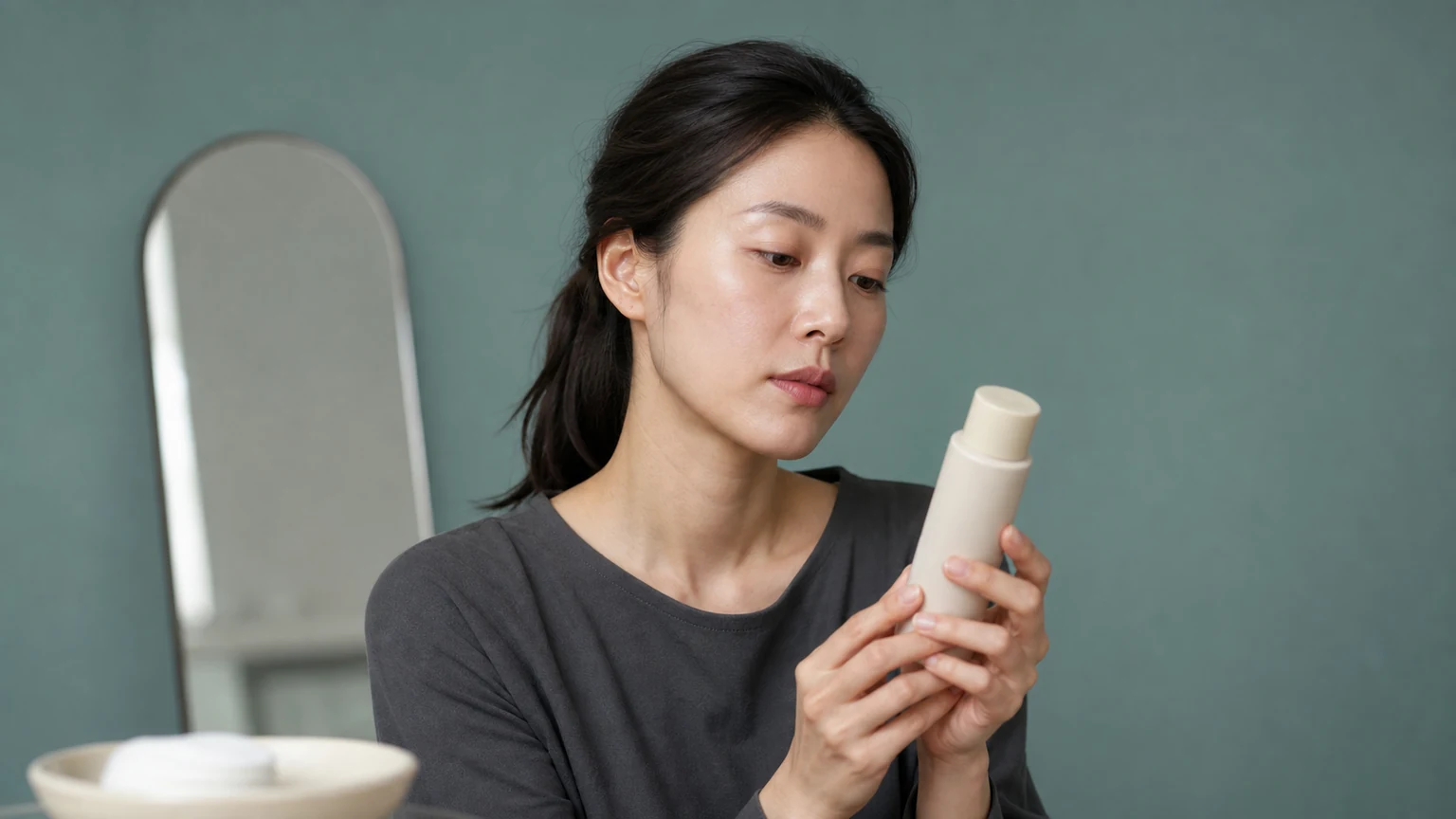
Skincare Is Changing
Ten-step routines, ingredient layering, a new serum every day… For a while, skincare meant "more, more often." But over the past two to three years, the direction has shifted. A trend called "high-performance minimalism" — or Skinimalism — has taken hold: protecting the skin barrier with a carefully chosen handful of products and delivering only the key actives.
In this article, Dr. Kim Gun-woo, Medical Director of Cellinique on Dosan-daero in Gangnam, uses the concerns he encounters in the clinic as a starting point to explain what Skinimalism is, why it emerged, and how daily home care and clinic treatments can be combined sensibly. For ingredient and mechanism details on specific procedures, see the Juvelook procedure guide and the Rejuran vs. Juvelook comparison guide.
3-line summary
1. Skinimalism is a philosophy of "fewer steps, better ingredients," named the world's number-one beauty trend by Pinterest and Vogue in 2021.
2. The core rationale is grounded in skin science — excessive layering of active ingredients can damage the skin barrier (which needs to stay at pH 4.1–5.8) and lead to microbiome imbalance, as reported in the academic literature (Clin Cosmet Investig Dermatol, 2023).
3. Practising high-performance minimalism isn't about reducing the number of steps — it starts from knowing precisely which ingredients your own skin needs. Because individual variation is large, organising your routine through a consultation is the safer path.
1. What Is Skinimalism?
Skinimalism is a portmanteau of "Skincare" and "Minimalism." The concept spread rapidly after Pinterest named it the world's number-one beauty trend in 2021 ("the new glow-up"), with Vogue and Harper's Bazaar giving it extensive coverage.
The idea is simple. "Rather than more products — fewer products that suit your skin." The goal isn't to cut the number of steps; it's to identify exactly which ingredients your skin needs and deliver only those. This isn't about doing nothing — it's about doing precisely what your skin actually requires.
From this emerges the concept of high-performance minimalism: reducing steps while increasing the potency of each one — routines in which a single high-concentration multifunctional product (serum or ampoule) handles multiple roles. According to Hwahae's Business Trend Report 2026, this direction is rising as one of the core beauty trends in the domestic market for 2025–2026.
💡 Fact-check ✓
Sources: Pinterest Beauty Trends 2021 official announcement · Vogue / Harper's Bazaar media coverage (2021) · Hwahae Business Trend Report 2026
- Skinimalism was officially announced as Pinterest's number-one global beauty trend in 2021 ("the new glow-up")
- Harper's Bazaar India (April 2026) recently covered the shift "from Glass Skin to Skinimalism"
- In South Korea, "high-performance minimalism" is reported as a key cosmetics trend keyword for 2025–2026 (Hwahae Business 2026)
- Effectiveness and suitability vary depending on individual skin condition
2. Why Skinimalism Now — Background and Scientific Context
Trends always emerge as reactions. The direct backdrop for Skinimalism is the side effects of the "10-step skincare routine" and aggressive active layering that were popular from the mid-2010s onwards.
The Problem with Over-Routinising
Layering potent chemical exfoliants (AHA/BHA), retinol, high-concentration vitamin C, and niacinamide simultaneously can exceed the range of irritation the skin's defence mechanisms can handle. The American Academy of Dermatology (AAD) warns that combining retinoids and exfoliating ingredients in the same routine can cause dryness, peeling, and worsening breakouts. In the clinic, complaints of "I was diligent about applying multiple products but my skin became more sensitive" are common.
The Skin Barrier and Microbiome Perspective
Recent dermatological science has turned its focus to the relationship between the skin barrier and the microbiome (the ecosystem of resident skin bacteria). The surface pH of healthy skin is maintained at roughly 4.1–5.8; excessive cleansing and the use of alkaline products can disrupt this pH balance, damaging the chemical barrier. In addition, skin residents such as Staphylococcus epidermidis are reported to be involved in ceramide production, supporting barrier function — and it is academically discussed that over-cleansing can disturb this balance.
💡 Fact-check ✓
Sources: Clin Cosmet Investig Dermatol, 2023 (PMID: 37583484) · American Academy of Dermatology (AAD) skincare guidelines
- "Daily skin-cleansing routines may cause microbioecological imbalance" is described in the 2023 academic literature (PMID: 37583484, Clinical, Cosmetic and Investigational Dermatology)
- Normal skin surface pH range: 4.1–5.8. Rising pH can damage the chemical barrier and reduce antimicrobial defence
- S. epidermidis contribution to ceramide production: reported to contribute to maintaining skin barrier integrity
- Research reflects general trend reporting; individual skin conditions vary. Consult a specialist if adverse reactions occur
3. Core Ingredients of High-Performance Minimalism — Within Verified Range
If Skinimalism is a philosophy of "use less," high-performance minimalism takes one more step: "use less, but make what you use evidence-based." Below is an introduction to ingredients that have been relatively well addressed in peer-reviewed clinical research. However, the content below is general ingredient information; suitability, usage, and concentration for individual skin conditions must be confirmed in a consultation.
| Ingredient | Main Action (reported range) | Clinical Evidence Level | Precautions |
|---|---|---|---|
| Retinol | Collagen synthesis stimulation, improvement of photoaged skin | Multiple randomised controlled trials (RCTs) reported (0.1–0.5% concentration range) | Initial irritation, dryness, photosensitivity. Caution with simultaneous layering of retinoids and exfoliants |
| Niacinamide (Vitamin B3) | Skin tone correction, barrier strengthening, anti-ageing | Improvement in skin radiance and smoothness at 6% concentration reported (Scientific Reports 2024, PMC11251187) | Some reports of flushing at high concentrations (>10%); formulation and concentration should be verified |
| Vitamin C (ascorbic acid family) | Antioxidant, pigmentation correction | Multiple clinical reports; large increases in search volume 2023–2024 (domestic ingredient trend data) | Oxidative instability; possible irritation with simultaneous retinol application; check pH and concentration |
| HA (Hyaluronic Acid) | Hydration and moisturising | Site of action differs by molecular weight (high-MW surface moisturising; low-MW towards dermal penetration) | Claims beyond standalone moisturising require verification of molecular weight and concentration |
| Ceramide | Replenishment of skin barrier lipid components | Reported in the direction of improving barrier function and reducing moisture loss | Also used for buffering irritation from other actives; consult a specialist when combining ingredients |
The above ingredients are among the more widely researched "core ingredient groups" for home care routines. However, even the same ingredient can produce different responses depending on concentration, formulation, and individual skin condition. "Does this combination of ingredients suit my skin?" is a question to verify in a consultation before purchasing.
4. Practising Skinimalism — Step-by-Step
Misunderstanding Skinimalism as "cut everything unconditionally" can lead to missing what matters. The key is first understanding what your skin needs, then delivering exactly that.
Step 1 — List Your Current Products
Write out all the skincare products you are currently using. Products with overlapping roles are common (multiple moisturisers, duplicate serums, etc.). Distinguishing what you need from what overlaps is the starting point.
Step 2 — Choose 1–2 Core Ingredients for Your Skin Concern
Trying to address all skin concerns simultaneously complicates the routine. Focus on ingredients for your primary concern (firmness, pigmentation, dryness, or sensitivity — prioritise 1–2), and add the rest incrementally after stabilising.
Step 3 — Prioritise Barrier Care
Whatever the routine, the foundation is protecting the skin barrier. Products that reduce irritation and lock in moisture (ceramide, moisturiser) should be the centre of any routine. Active ingredients work best when the barrier is stable.
Step 4 — Sun Protection Is Non-Negotiable
Even in a Skinimalism routine, sunscreen (SPF 30 or above, PA++ or above recommended) is a step that never gets removed. Preventing photoaging is known as one of the highest-cost-effectiveness forms of skin management of any high-performance active.
Step 5 — Allow a "Silence Period" in the Routine
When introducing a new ingredient, use it alone for a set period to observe the response before layering. If you introduce multiple ingredients simultaneously, it becomes difficult to identify the cause if a problem arises.
5. The Combination of Home Care and Clinic Treatments — A Rational View
In the Skinimalism context, a "minimalist approach to treatments" is attracting interest. The structure is: clinic treatments supplement skin layers and mechanisms difficult to reach with home care alone (dermal collagen and elastin fibre stimulation), while a minimal, barrier-protecting home care routine is maintained on top.
For example, a skin booster such as Juvelook (PDLLA + HA) is known to help stimulate dermal collagen. It can be considered as complementing layers that home care actives like niacinamide or retinol cannot reach. However, the suitability and sequencing of any combination of treatments depends on individual skin condition, current routine, and goals, and is difficult to judge independently without a specialist consultation.
| Approach | Representative Method | Main Layer of Action | Precautions |
|---|---|---|---|
| Home care core ingredients | Retinol, niacinamide, vitamin C, ceramide | Epidermis and upper dermis | Beware of irritation from ingredient layering; check concentrations and order |
| Skin booster procedures | Juvelook (PDLLA+HA), Rejuran (PN), etc. | Dermis (direct injection) | Routine adjustment required post-procedure; individual variation and possible side effects |
| Energy-based procedures | RF, HIFU, laser, etc. | Dermis and SMAS layer | Treatment interval and combination design are decided in consultation |
※ The table above is general category guidance. The suitability of treatment combinations and sequencing varies by individual condition; self-determining without a consultation is not recommended.
At Cellinique, we consult on home care routine organisation and clinic treatment planning together. We provide direct guidance in prior consultations on whether your current products conflict with planned treatments, and which ingredients should be paused before and after procedures.
6. Cellinique's View on Skinimalism
Among those we see in the clinic, it isn't rare for someone to come in asking "I was diligent — why has my skin become more sensitive?" In most cases, good ingredients had been combined, but used in an order or at concentrations not suited to the skin's condition, or the barrier recovery stage had been skipped.
The reason practising Skinimalism matters is that it redesigns the routine in a direction that respects what the skin can handle. At Cellinique, we carry out this kind of routine review as part of our consultations. The conversation that starts with "What products are you currently using?" is, before any procedure, quite an important starting point.
Beyond whether the trend is right or wrong, knowing precisely what your skin needs — that is the core question Skinimalism poses.
Frequently Asked Questions (FAQ)
Q1. Does practising Skinimalism mean I have to cut down on skincare products unconditionally?
Not necessarily. The core of Skinimalism is "using only what your skin needs, precisely" — not the goal of reducing a number. Using five products, each evidence-based and suited to your skin, is fully Skinimalism. Conversely, using two products that don't suit your skin's condition is a different matter. Understanding what your skin needs comes first.
Q2. Can retinol and niacinamide be used together?
There are reports that using them together is generally possible. However, irritation may differ depending on skin condition, concentration, and order of application. Retinol can cause dryness, flushing, and peeling in the early period of use, and there are views that niacinamide can serve a buffering role at that time. We recommend introducing them step by step while observing your skin's individual response. If you are uncertain about the prescription or concentration, please confirm through a consultation.
Q3. If I organise my home care routine, will clinic treatments also be more effective?
There are cases where the state of the routine can affect treatment outcomes. There is a tendency for recovery to go more smoothly when procedures are performed with the skin barrier in a stable state. Conversely, using irritating products right up until a procedure can place a burden on post-procedure recovery. At Cellinique, we review your current home care routine together in the prior consultation, and guide you on which ingredients and products should be paused before the procedure.
Q4. Can sunscreen be omitted in a Skinimalism routine?
We strongly recommend against omitting it. Sun protection is one of the home care steps with the strongest evidence for preventing photoaging. Even if the number of steps is reduced, the three-step minimum of cleansing, moisturising, and sun protection is best maintained as the foundation of a minimal routine.
Q5. Can a Skinimalism routine be applied after a procedure?
Immediately after a procedure, the prescribed aftercare products should come first. During the recovery period, active ingredients (retinol, AHA, BHA, high-concentration vitamin C, etc.) are generally safest to pause. When and how to restart the routine differs depending on the type of procedure, so please refer to the post-procedure instructions or contact Cellinique.
Q6. Is high-performance minimalism an approach suited to all age groups?
Skin concerns differ by age, and so do the ingredients needed. For those in their 20s, barrier stabilisation and sun protection are often the priority, while for those in their 30s–40s, collagen- and firmness-oriented ingredients become additional candidates for consideration. Whatever the age, knowing precisely which ingredients suit your skin is the key, and optimising the routine by age group is safest done together in a consultation.
Q7. How can I tell if my skin barrier is damaged?
When the skin barrier is damaged, the skin may flush more easily than usual, react more sensitively to irritating products, or feel dry even after moisturising. If symptoms of "I've been diligent, but my skin has become more sensitive" persist, it is a good idea to review your current routine. Accurate root-cause identification and routine restructuring can be helped through a consultation.
Closing
Skinimalism is not simply a skin-version of the minimalist lifestyle movement — "let's use less." It is a precise approach to understanding exactly what your skin needs and delivering only that, with evidence. And the starting point of that precision always comes from understanding your skin's condition.
At Cellinique (Dosan-daero, Gangnam), Dr. Kim Gun-woo personally consults on everything from home care routine organisation to clinic treatment combination design. If your current routine feels complicated or your skin seems to have become more sensitive, we recommend starting with a consultation first. For information on skin booster and lifting procedures, please see the Juvelook procedure guide and the Rejuran vs. Juvelook comparison guide.
Results, maintenance, and suitability differ depending on each individual's skin condition, age, and lifestyle pattern, and the same outcome cannot be guaranteed.
Procedures carry the possibility of side effects such as temporary redness and swelling, and there may be contraindications; these are confirmed in a prior consultation.
✅ Fact-check completion report
The key information in this article was confirmed against the following sources.
- Pinterest Beauty Trends 2021 official announcement — Skinimalism named global number-one beauty trend ("the new glow-up") ✓confirmed
- Harper's Bazaar India, April 2026 — Skinimalism trend coverage ✓confirmed
- Hwahae Business Trend Report 2026 — domestic high-performance minimalism trend confirmed (direct fetch) ✓
- PMID: 37583484 / Clinical, Cosmetic and Investigational Dermatology (2023) — skin microbiome and barrier relationship; reports of adverse effects from over-cleansing ✓confirmed
- PMC11251187 / Scientific Reports 2024 — niacinamide 6% + HA combination clinical study: 44 women, 2 months, 44% improvement in radiance, 15% reduction in wrinkles reported (small study; individual variation exists) ✓confirmed
- American Academy of Dermatology (AAD) — warning on irritation from layering retinoids and exfoliants; general guidelines confirmed ✓
- Unverified items: domestic ingredient search-volume figures ("93% increase in retinol," "523% increase in vitamin C") are based on secondary reporting; definitive expressions were not used
- Treatment effects (Juvelook, skin booster combinations) have individual variation; no definitive claims were made
Medical disclaimer
This content is intended to provide general health information; individual diagnosis, procedure suitability, and expected effects must be determined through a prior consultation with a physician. All medical procedures carry individual variation and the possibility of side effects.
Cellinique consultation and booking
2F & B1, Yeonseung Building, 228 Dosan-daero, Gangnam-gu, Seoul
Phone 02-6203-3434
Hours: Mon–Fri 10:00–19:00 / last Saturday of each month 10:00–16:30
