
For Those Wondering About Barrier Care
In dermatology conversations, phrases like "your barrier has weakened" or "you need to strengthen your barrier" come up often. Yet finding a clear, organized explanation of exactly what the skin barrier is and why it matters can be surprisingly difficult.
This guide walks through the structure and role of the skin barrier, the most common causes of damage, and a stepwise look at home-care principles and calming-treatment approaches. If you have sensitive skin or barrier-related concerns, you may also find our Cellinique barrier care treatment overview and sensitive skin care guide useful as companion reading.
Three key points at a glance
1. The skin barrier is anchored in the stratum corneum, where ceramides, cholesterol, and fatty acids form a tightly organized lipid structure that limits water loss and shields skin from external stressors.
2. Everyday habits — over-cleansing, irritating ingredients, dry environments, and insufficient sleep — can gradually weaken the barrier; recovery starts with adequate moisturization and minimizing further irritation.
3. When home care is not sufficient, calming and restorative treatment approaches can be explored, tailored to each individual's skin condition — with results that vary from person to person.
1. What Is the Skin Barrier?
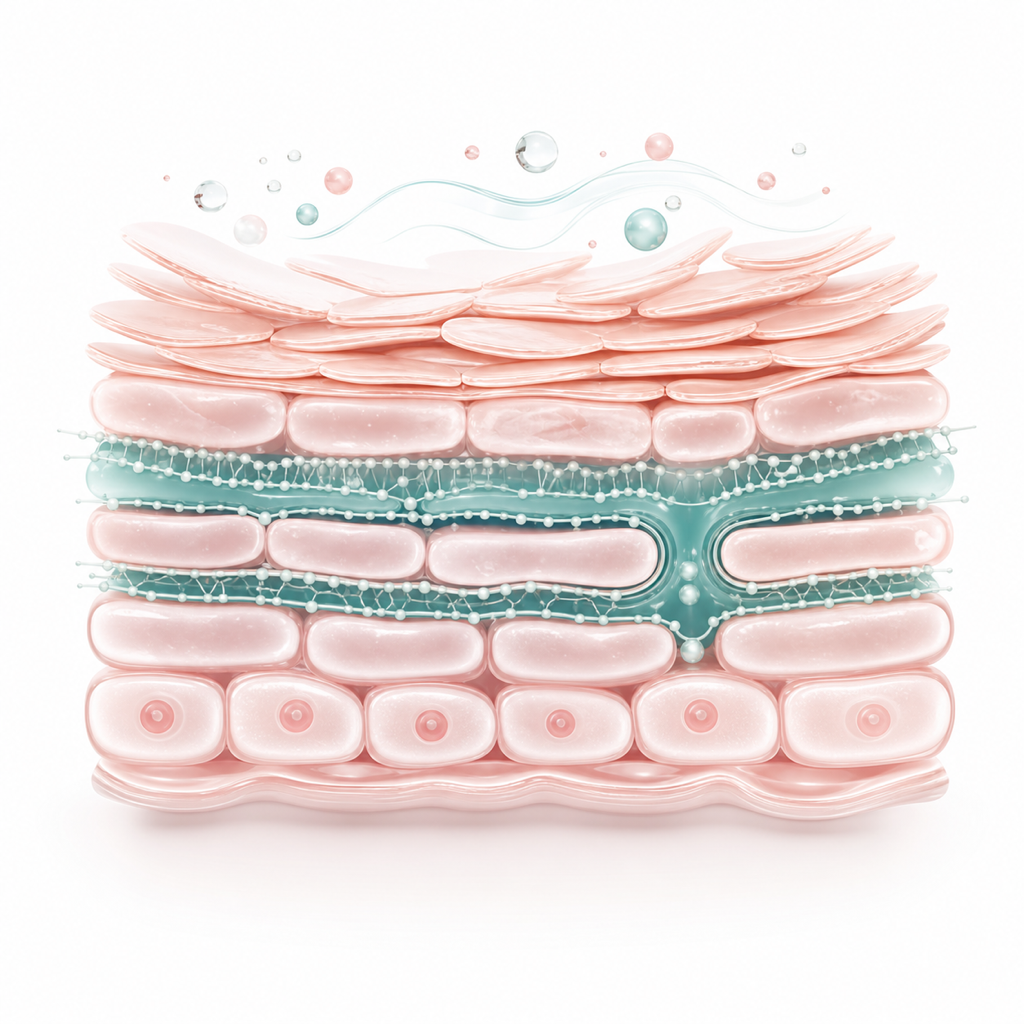
The skin barrier is centred on the stratum corneum, the outermost layer of the skin. Corneocytes are stacked in multiple layers, with the spaces between them filled by a lipid matrix — often described as a "brick-and-mortar" arrangement.
The key components of that lipid matrix are ceramides, cholesterol, and free fatty acids. When these three exist in proper balance, the lamellar body structures within the stratum corneum remain tightly organized, effectively limiting water loss and preventing external irritants from penetrating.
The mildly acidic pH of the skin surface is also an important element of barrier function. The skin naturally maintains a slightly acidic pH of around 4.5–5.5; when this environment is disrupted, barrier-related enzyme activity shifts and the skin's defensive capacity can decline.
The principal lipid components of the stratum corneum are ceramides, cholesterol, and free fatty acids; ceramides consist of a sphingoid base linked to a fatty acid chain and form the lamellar structures between corneocytes that limit transepidermal water loss (TEWL) and defend against external pathogen entry. The acidic skin surface environment is essential for maintaining barrier enzyme activity; rising pH increases serine protease activity, impairing barrier function. The degree of effect and the pattern of recovery vary according to each individual's skin condition.
Sources: Uchida & Park, Am J Clin Dermatol, 2021 (PMID 34283373) · Schild et al., Int J Cosmet Sci, 2024 (PMID 39113291) · Choi & Kang, Ann Dermatol, 2024 (PMID 38325428)
When the skin barrier is intact, skin stays hydrated and tolerates external stressors well. When it is compromised, water loss increases — leading to dryness and tightness — and even mild irritants can trigger redness or breakouts more easily.
| Barrier Component | Role | Representative Examples |
|---|---|---|
| Stratum corneum lipids | Moisture-sealing layer; blocks external penetration | Ceramides, cholesterol, free fatty acids |
| Natural Moisturizing Factors (NMF) | Maintain moisture within the stratum corneum | Amino acids, organic acids, urea, etc. |
| Acidic skin pH | Maintains barrier enzyme environment; antimicrobial defence | Free fatty acids, urocanic acid, lactic acid (sweat), etc. |
| Skin microbiome | Supports immune and antimicrobial defence | Resident flora such as Staphylococcus epidermidis |
2. Why and How Does the Skin Barrier Become Damaged?
The skin barrier can be weakened by a wider range of factors than most people expect. Rather than collapsing all at once, it tends to degrade gradually as minor daily irritants accumulate over time.
Common causes of damage
- Over-cleansing and physical friction — Cleansing too frequently or too vigorously can strip the stratum corneum of its lipids. Exfoliating scrubs and physical exfoliation tools can have a similar effect if overused.
- Exposure to irritating ingredients — Repeated contact with fragrances, drying alcohols, surfactants, or products whose pH is poorly matched to the skin can stress the barrier.
- Dry environments — Low-humidity, heavily ventilated indoor spaces and seasonal dryness (especially in winter) can draw moisture from the stratum corneum and disrupt the lipid architecture.
- Excessive UV exposure — Ultraviolet radiation raises oxidative stress in the skin and can affect the integrity of barrier components.
- Insufficient sleep and chronic stress — Skin undergoes repair during nighttime sleep; persistent sleep deprivation and high stress can slow barrier regeneration.
- Age-related decline — The skin's capacity to produce ceramides and other barrier lipids is reported to diminish gradually with age.
Signals that the barrier may be compromised
- Prolonged tightness and dryness following cleansing
- Dryness returning quickly even after moisturizing
- Stinging or redness when applying skin care products
- Fine lines or skin texture appearing more pronounced
- Recurring breakouts or a general sense of increased skin sensitivity
If any of these signals persist, the skin may not be receiving adequate protection. The most important first step at that point is reducing further irritation and re-establishing a basic moisturizing environment.
3. Core Home-Care Principles for Supporting the Barrier
Strengthening the skin barrier depends on refining your daily routine more than on any particular ingredient or treatment. The guidance below represents general home-care recommendations; what is best suited to your skin may vary.
Cleansing
- Aim for one to two cleansing sessions per day as a baseline; avoid increasing beyond what is necessary.
- Choosing a mild, low-irritation cleanser can be helpful.
- Lukewarm water is generally recommended. Very hot water may contribute to lipid breakdown.
- After cleansing, gently pat the skin dry rather than rubbing with a towel.
Moisturizing
- Applying moisturizer while the skin still has some residual moisture after cleansing is generally recommended.
- Ceramide-containing moisturizers are understood to help supplement the stratum corneum lipid structure. That said, perceived benefit can vary depending on the formulation and individual skin condition.
- Review your full routine — cleansers, toners, and creams — for potentially irritating ingredients such as fragrances and drying alcohols.
Sun protection
- Using sunscreen can help reduce UV-induced skin damage and support barrier protection.
- Choose an SPF and PA rating appropriate to your environment, and reapply at regular intervals.
Among moisturizer ingredients, occlusives are known to seal the stratum corneum surface and reduce TEWL; humectants attract moisture; and emollients are understood to reinforce the physical barrier of the stratum corneum. Ceramide-containing products aim to supplement the stratum corneum lipid structure and there is research suggesting benefit for barrier function in dry and eczema-prone skin. The degree of benefit from home-care moisturizers varies by individual skin condition, product formulation, and method of application; consistent routine maintenance matters more than expecting dramatic results.
Sources: Rajkumar et al., Skin Pharmacol Physiol, 2023 (PMID 37717558) · Schild et al., Int J Cosmet Sci, 2024 (PMID 39113291)
Lifestyle habits
- Adequate sleep — maintaining a consistent sleep schedule supports the skin's nighttime repair mechanisms.
- Reducing excessive alcohol and smoking — both can affect oxidative stress and skin-level circulation.
- Maintaining appropriate indoor humidity — using a humidifier during dry seasons can help support the skin's environment.
Home care can protect the barrier to a significant degree, but if you feel the skin has deteriorated considerably or home care alone is not sufficient, it is worth consulting a professional to explore additional approaches.
4. An Overview of Calming and Barrier-Restorative Treatment Approaches
Home care takes priority, but when the skin barrier is significantly compromised, treatment approaches supporting calming and regeneration can also be considered. The approaches below are general in nature; not every option suits every person. The right direction is best determined through individual consultation based on your specific skin condition and goals.
Intensive calming and hydration treatments
There are treatment approaches designed to deliver moisture and nutrients directly to the skin or to support calming. The aim is to create an environment in which the barrier can recover while improving skin texture and hydration levels.
Restorative and regenerative approaches
Approaches using ingredients that support the repair of damaged skin tissue are also worth considering. Which ingredients to use, at what depth, and by what method all depend on the individual's skin condition.
Laser and light-based calming treatments
Light-energy-based approaches that minimize irritation while promoting skin regeneration are another option. Wavelength and energy settings must be calibrated to the skin condition, so prior consultation is always required.
※ The treatment directions mentioned above are general in nature and do not constitute a guarantee of any particular treatment's efficacy or outcome. Which approach is right for you depends on your individual skin condition, health status, and goals, so the decision must always be made through prior consultation. Outcomes, longevity, and downtime vary from person to person.
5. How Cellinique Approaches Barrier Care
Cellinique is an aesthetics clinic located on Dosan-daero in Gangnam. For clients whose skin barrier has weakened, we believe the most important first step is accurately understanding the current situation — not rushing into a treatment.
Medical Director Dr. Kim Gun-woo personally reviews each patient's skin condition, current products, and lifestyle habits during consultation, and guides the conversation on whether home-care adjustments should come first or whether treatment approaches should be explored alongside. Barrier recovery is a process that benefits from consistent ongoing management and the right routine — not something completed in a single session.
Consultation and treatment costs vary according to individual condition and care plan; details are provided during the initial consultation. Please feel free to contact us at 02-6203-3434 or via KakaoTalk with any questions.
Frequently Asked Questions (FAQ)
Q1. What symptoms appear when the skin barrier is weakened?
Persistent tightness and dryness after cleansing, a stinging or reddening sensation when applying skin care products, and dryness returning quickly after moisturizing can all suggest the barrier may be insufficient. Recurring breakouts or a general increase in skin sensitivity may also be signals. These symptoms can, however, occur in other skin conditions as well, so the underlying cause should be confirmed through a professional consultation.
Q2. What is the most important thing for strengthening the skin barrier?
The most fundamental step is reducing irritation and maintaining adequate moisture. Cutting back on over-cleansing, repeated exposure to irritating ingredients, sleep deprivation, and chronic stress, while consistently using a mild moisturizer, is the approach most commonly recommended. Ceramide-containing moisturizers are understood to help supplement the stratum corneum lipid structure, although perceived benefit varies by product and skin condition.
Q3. Will using ceramide skin care products restore the barrier?
Ceramides are a key component of stratum corneum lipids, and there is research suggesting that ceramide-containing moisturizers can help supplement the barrier's lipid structure. However, not all products deliver the same effect, and there can be differences in how much benefit is perceived based on ingredient concentration, formulation, method of use, and individual skin condition. Skin care products are not medical treatments, and significant skin barrier damage may benefit from professional consultation.
Q4. If the barrier is significantly weakened, is it better to receive a treatment?
If recovery with home care alone is proving difficult, or if the skin condition continues to worsen, exploring treatment approaches in consultation with a professional is a reasonable option. Which approach is appropriate depends on each individual's skin condition and goals. Rather than proceeding with a treatment without guidance, the more important first step is understanding your current skin state accurately. At Cellinique, consultations without any commitment to treatment are welcome.
Q5. Is barrier care treatment suitable for everyone?
Even treatments aimed at barrier recovery require careful consideration in certain situations — during pregnancy or breastfeeding, when there is active infection or inflammation in the treatment area, or when a known allergy to specific ingredients exists. Please confirm during consultation which treatments may be available to you and what information should be shared in advance.
Q6. Can home barrier care and treatments be done at the same time?
In general, maintaining the right home-care routine alongside treatment is beneficial. That said, certain ingredients — retinol, AHA/BHA, and strong exfoliants — may need to be temporarily adjusted after treatment. Post-treatment care guidance differs by treatment type and condition; please follow post-treatment instructions carefully.
Q7. How long does skin barrier management take?
The pace of barrier recovery varies by individual skin condition, age, lifestyle habits, and consistency of routine — and it is difficult to state a fixed timeframe for completion. The general recommendation is to maintain the right routine consistently while monitoring how the skin responds. If no meaningful improvement is seen or if the condition worsens, please seek a professional consultation.
Q8. Are folk remedies or foods said to be good for the barrier actually effective?
A great deal of information about folk remedies and "skin-friendly" foods circulates online, but most of these claims are not clinically well validated. It is difficult to conclude that any specific food or folk remedy "directly strengthens" the skin barrier. Rather than placing excessive trust in unvalidated approaches, following a consistent basic routine — moisturizing, minimizing irritation, and sun protection — matters more. For significant skin concerns, please consult a professional.
Closing
The skin barrier is the skin's foundational line of defence — something to tend to before reaching for advanced treatments. When the ceramide-cholesterol-fatty acid balance, the natural moisturizing factors, and the mildly acidic pH all remain in order, the skin can tolerate external stressors and hold onto moisture.
The right sequence is to address the home-care routine first; if that alone is not sufficient, then exploring the professional approach tailored to your individual condition. If you have questions about skin barrier care or are concerned about your current skin state, we welcome you to come in for a consultation at Cellinique.
This content is provided for general health information purposes only. Individual diagnosis and treatment should always be discussed with a qualified medical professional.
Outcomes, longevity, and suitability vary by individual skin condition, age, and lifestyle; identical results cannot be guaranteed.
Discuss options for your current needs
We review your current health and prior procedures before explaining appropriate options and their limits.