
Why Does Skincare Order Matter?
What would happen if you applied your serum first and your toner afterwards? Even with the best products, using them in the wrong order can prevent active ingredients from absorbing properly — or cause later products to simply sit on top of earlier ones rather than penetrating the skin. In skincare, what you use matters, but so does the order in which you use it.
In this guide, we walk through each step from cleansing to sun protection — covering the principles behind the order, the differences between morning and evening routines, adjustments by skin type, and the most common mistakes. It is organised around the questions Dr. Kim Gun-woo, Medical Director of Cellinique, encounters most frequently in consultations.
3-Line Summary
1. As a general rule, skincare products should be applied from lightest texture and highest water content to heaviest and most oil-rich (cleansing → toner → serum → eye cream → moisturiser → sunscreen).
2. The morning routine centres on protecting the skin from external stressors, while the evening routine focuses on recovery and deep hydration — which is why product selection and order differ between the two.
3. Individual variation is significant depending on skin type and the active ingredients used, so for retinol, acids, and other actives, a professional consultation before introduction is recommended.
1. The Core Principle of Skincare Order
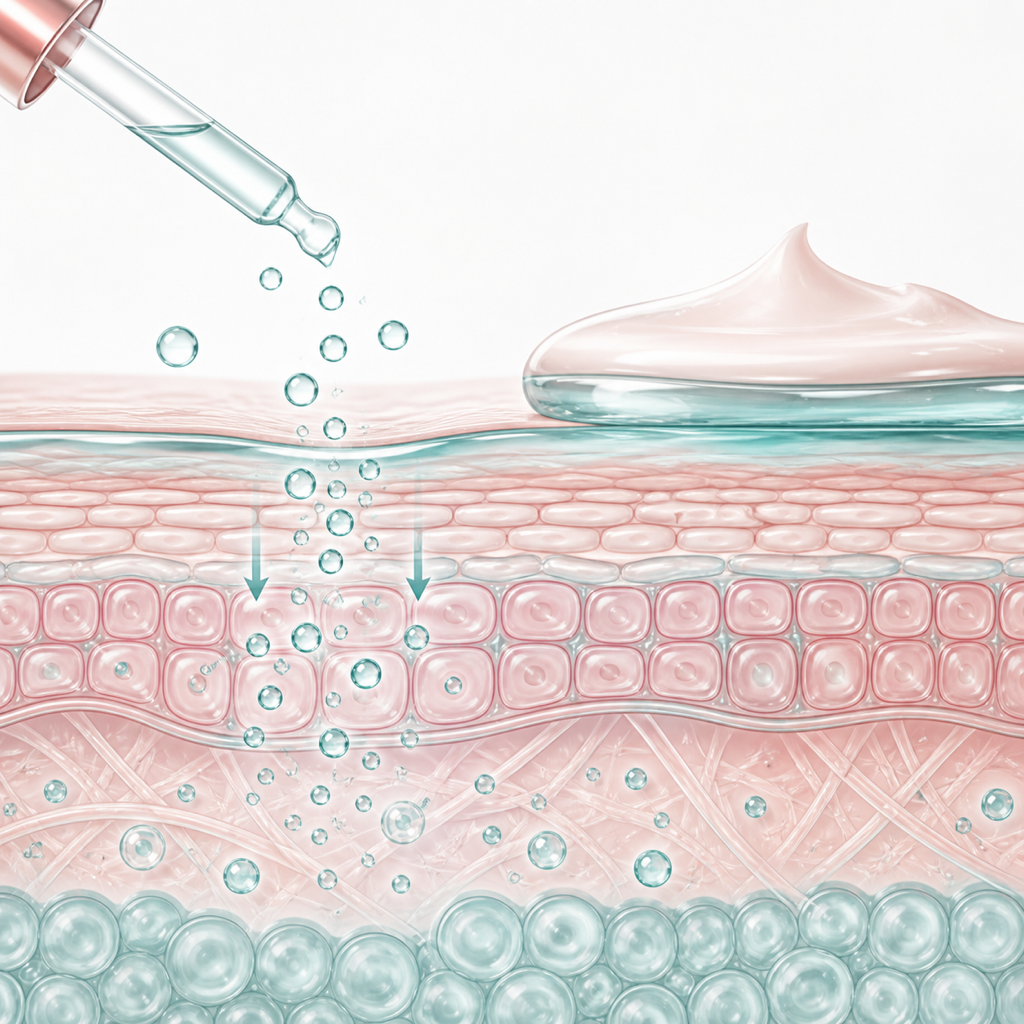
There is one fundamental rule for applying skincare products: go from lightest texture and highest water content to heaviest and most oil-rich. Following this principle allows lighter ingredients to absorb into the skin first, while the cream or oil applied on top seals in moisture.
Applying a heavy cream first makes it difficult for the serum or ampoule applied afterwards to penetrate the skin, because an occlusive film has already formed on the surface.
How the Skin Absorbs
The skin is equipped with a barrier (the Skin Barrier) designed to prevent foreign substances from passing through easily — the stratum corneum plays the central role in this. Skincare ingredients move into the skin through this barrier, and smaller-molecule, water-soluble ingredients penetrate more readily. That is why it is more effective to apply active ingredient-rich serums first, then layer a moisturiser or cream on top to prevent moisture loss.
Khmaladze I et al. (2020) report that a four-step skincare routine significantly reduced the depth of periorbital fine lines over six months (small observational study; individual results vary). The AAD states that the order in which skincare products are applied affects how well they work, recommending the sequence: cleanse → toner → serum → moisturiser → sunscreen (morning). Sethi A et al. (2016) recommend including an SPF moisturiser as the final step of a daily routine, citing sunscreen as the key step in preventing photoageing. Effectiveness and degree of absorption vary according to individual skin condition, ingredient concentration, and method of use.
Sources: PMID 33380819 · PMC4885180 / PMID 27293248 · AAD
2. The Basic 5-Step Skincare Routine
| Step | Product Type | Role | Morning | Evening |
|---|---|---|---|---|
| Step 1 | Cleanser | Removes sebum, dirt, makeup and other impurities; preps the skin | ○ (gentle foam) | ○ (double cleansing possible) |
| Step 2 | Toner | Restores pH balance; prepares the skin for the next step | ○ | ○ |
| Step 3 | Serum / Ampoule / Essence | Delivers concentrated active ingredients (hydration, brightening, firming, etc.) | ○ (antioxidants, hydration) | ○ (retinol, acids, etc.) |
| Step 4 | Eye Cream / Moisturiser (Lotion) | Forms a protective moisture barrier; prevents transepidermal water loss | ○ | ○ |
| Step 5 | Sunscreen (SPF) | Blocks UV-A and UV-B; prevents photoageing | ✓ Essential | ✗ (not needed) |
※ The steps above are a general guideline. What is right for you may differ depending on the concentration of ingredients in your products, your skin type, and your skin condition. For active ingredients such as retinol, AHA, or BHA, a professional consultation before introduction is recommended.
3. Cleansing: The Foundation of Every Routine
Cleansing is the most fundamental step in skincare — and also the most overlooked. Properly removing sebum, dust, dead skin cells, and makeup residue from the surface of the skin is what allows the ingredients in the products that follow to actually reach the skin. No matter how effective your serum is, it will have difficulty working if applied over an unprepared surface.
Morning Cleansing
Even in the morning, cleansing is necessary to remove sebum produced overnight and residue from your evening skincare products. In the morning, a gentle gel or foam cleanser that does not disrupt the skin barrier is most appropriate. Some people with less active sebum production find that water-only rinsing is sufficient, but if you tend towards oiliness, a gentle cleanser is advisable.
Evening Cleansing: Double Cleansing
On days when you have worn sunscreen or makeup, double cleansing is recommended. First, use an oil-based cleanser — an oil, balm, or micellar water — to dissolve the oil-based residue from makeup and sunscreen. Then follow with a foam or gel cleanser to remove water-based impurities. On days without makeup, the second cleanser alone is often sufficient.
Common Cleansing Mistakes
- Scrubbing too hard — This can damage the skin barrier. Use gentle, circular motions instead.
- Using water that is too hot — This can strip the skin of too much oil, leading to dryness and irritation. Lukewarm water is recommended.
- Over-cleansing — Cleansing more than twice a day can actually weaken the skin barrier.
4. Toner: Preparing the Skin for Absorption
Toner is used after cleansing to balance the skin's pH and prepare it for better absorption in the next steps. The skin can become temporarily more alkaline immediately after cleansing, and toner can help restore it to a mildly acidic state (pH 4.5–5.5).
That said, many cleansers on the market today are formulated to minimise disruption to skin pH, and opinions differ — depending on the product and skin type — on whether a toner is strictly necessary for pH adjustment. Many people use a toner primarily for its hydrating or soothing benefits.
Tips for Using Toner
- Pressing toner gently into the skin with your palms, rather than a cotton pad, reduces product waste.
- Toners with a high alcohol content can be irritating for dry or sensitive skin — check the ingredient list.
- Toners containing exfoliating ingredients (AHA, BHA, etc.) are best tried in the evening, every two to three days initially, to monitor your skin's response.
5. Serum, Ampoule, and Essence: The Active Ingredient Step
Serums, ampoules, and essences deliver concentrated active ingredients to the skin. Choose the right formulation for your goal — hydration, brightening, firming, or soothing — and apply it after toner and before moisturiser. The reason these products come before the moisturiser is to allow their smaller-molecule, lighter-weight ingredients to absorb into the skin before the occlusive film of the cream forms.
Guide to Active Ingredient Timing
| Ingredient Type | Recommended Timing | Notes |
|---|---|---|
| Vitamin C (antioxidant) | Morning preferred | Helps defend against oxidative stress from UV exposure. High-concentration products may cause irritation — patch test first. |
| Hyaluronic acid (hydration) | Morning or evening | Most effective when applied to damp skin — it binds to moisture already present in the skin. |
| Niacinamide | Morning or evening | Generally well tolerated across most skin types. |
| Retinol (Vitamin A derivative) | Evening only | May be broken down by light; can cause irritation and peeling, especially initially. Start with a low concentration every other night. Consult a professional before introducing. |
| AHA / BHA (exfoliating acids) | Evening preferred | May increase photosensitivity. Sun protection is essential. Beginners should start with a low concentration, one to two times per week. |
| Peptides (firming) | Morning or evening | Check for reactions when using alongside retinol or AHA. |
Retinol (a Vitamin A derivative) is a widely studied ingredient for supporting skin renewal and firmness; however, initial use may cause irritation, peeling, or dryness — starting with a low concentration every other night and consulting a professional before introduction is advised. AHA (glycolic acid, lactic acid, etc.) and BHA (salicylic acid) are used for exfoliation and pore management, but they can increase photosensitivity, making daily sun protection essential. Vitamin C (L-ascorbic acid) is an antioxidant and brightening ingredient often used in morning routines to complement UV protection; high-concentration products should be patch tested first. The effect and irritation response of all active ingredients vary considerably based on concentration, formulation, and individual skin condition.
Sources: AAD · PMC4885180 · KDA
6. Moisturiser: Sealing in Hydration
The role of a moisturiser (cream or lotion) is to form a protective film that prevents the moisture and active ingredients delivered by your serum from evaporating out of the skin. When the skin barrier is compromised, adequate moisturising is especially important — exposure to dry conditions without proper hydration can further weaken barrier function.
Choosing a Moisturiser by Skin Type
- Dry to very dry skin — Richer creams with ceramides, shea butter, or squalane are recommended.
- Oily or breakout-prone skin — A light, non-comedogenic gel or lotion formulation.
- Combination skin — Applying different textures to the T-zone and U-zone (cheeks and jaw) is one approach.
- Sensitive skin — A gentle, minimal formula with no added fragrance, alcohol, or colourants.
Eye cream is generally applied before moisturiser. The skin around the eyes is thinner and more delicate than the rest of the face, so use a product formulated for the eye area and apply it with a light tapping motion.
7. Sunscreen (SPF): The Final — and Most Important — Morning Step
Sunscreen is the last step of your morning skincare routine and, as a single product, has the most evidence behind it for slowing skin ageing. UV-A penetrates deep into the skin to break down collagen and cause photoageing, while UV-B affects the surface to cause burning and pigmentation.
Sunscreen is applied after moisturiser, as the final step before going outdoors. It goes last because it needs to sit uniformly on the outer surface of the skin — without interference from other products — to block UV rays effectively.
Tips for Using Sunscreen
- SPF 30 or above and PA++ or above are the generally accepted starting points when choosing a sunscreen.
- Apply a generous amount 15 to 30 minutes before going outdoors. A small amount will not deliver the SPF value shown on the label.
- Reapply every two hours, or immediately if removed by sweat or water.
- UV-A can penetrate through windows, so sunscreen is recommended even during indoor daily life.
- After applying sunscreen, allow one to two minutes for it to settle on the skin before touching your face or layering anything on top.
※ SPF and PA ratings on sunscreens are labelled and approved in accordance with standards set by the relevant regulatory authority in each market. Always read the product label for ingredient and usage information.
8. Morning Routine vs Evening Routine: What Is Different?
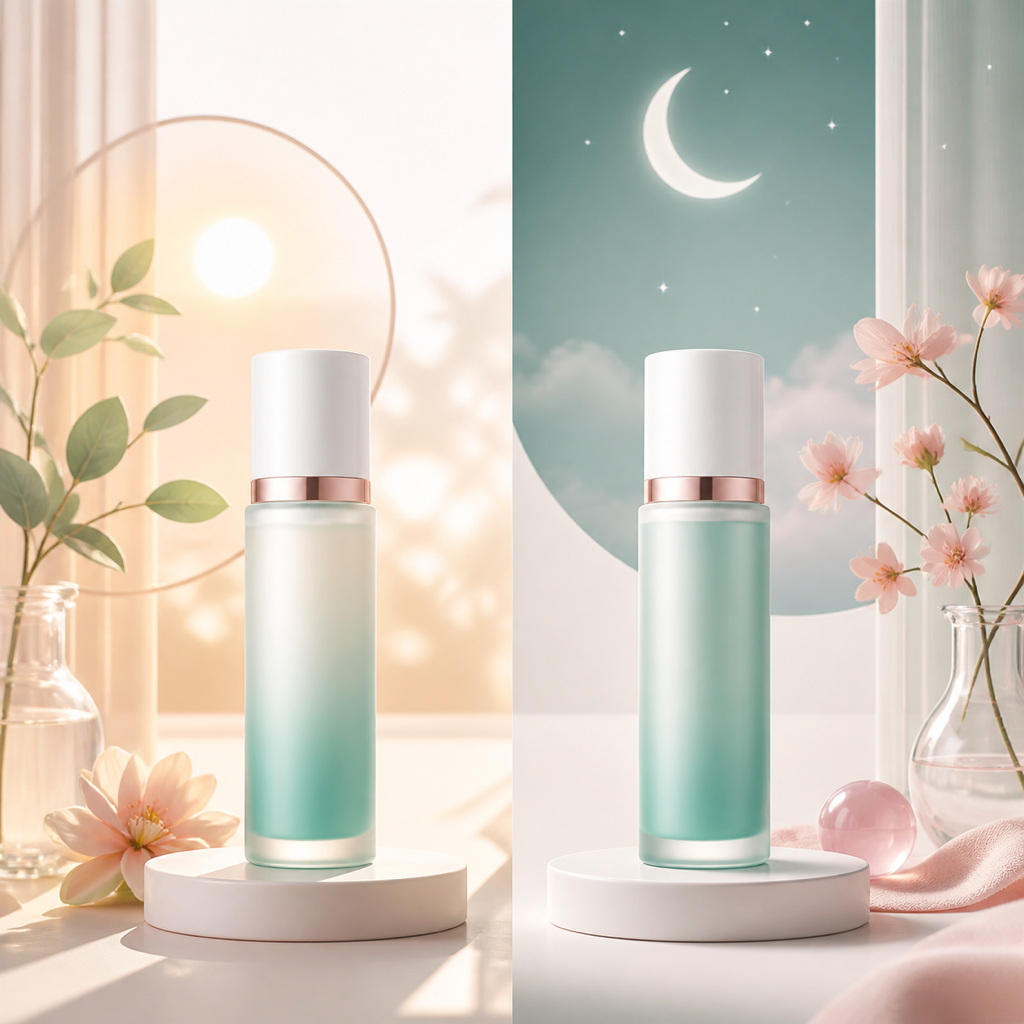
Because the purposes of the morning and evening routines differ, the types of products and the order in which they are used also differ. The morning routine centres on protecting the skin from external stressors (UV, pollution, environmental stress), while the evening routine focuses on helping the skin recover and regenerate from the day's exposure.
| Morning Routine | Evening Routine | |
|---|---|---|
| Primary Purpose | Protection from external stressors | Skin recovery, regeneration, deep hydration |
| Cleansing | Gentle cleanser or water rinse | Double cleansing (removes makeup and sunscreen) |
| Serum Ingredient Choice | Antioxidants (Vitamin C), hydration (hyaluronic acid), brightening (niacinamide) | Renewal (retinol), exfoliation (AHA/BHA), hydration and firming (peptides) |
| Sunscreen | Essential (final step) | Not needed |
| Overall Weight | Prefer lightweight, fast-absorbing textures | Can include richer, higher-concentration products |
9. Adjusting Your Skincare Routine by Skin Type
The basic order remains the same, but which steps to emphasise and which products to choose will vary by skin type. Identifying your skin type accurately is the starting point for designing your routine.
Dry Skin
The priority is to layer hydration generously. Apply toner → serum → moisturiser as quickly as possible after cleansing to form a moisture seal before water evaporates. Avoid toners with high alcohol content and strong exfoliants.
Oily or Breakout-Prone Skin
Rather than heavy hydration, the priority is keeping pores clear and balancing sebum. Maintain hydration with a lightweight gel serum and a non-comedogenic lotion, and consider a BHA-based exfoliant in the evening. Even oily skin requires sunscreen — choose an oil-free, non-comedogenic formula.
Combination Skin
A multi-zone approach — applying different products to the T-zone (forehead and nose) and U-zone (cheeks and jaw) — is one option. Keep the T-zone light and add more moisture to the U-zone.
Sensitive Skin
When introducing a new ingredient, do it one at a time, starting with a small amount. Introduce actives such as retinol, AHA, and BHA slowly, observing how the skin tolerates each one. Some people react to added fragrance, ethanol, or chemical UV filters (such as oxybenzone) — always check the ingredient list.
10. Seven Common Mistakes
Even when you know the right order, habitual mistakes can undermine your routine. Check the list below.
- ① Applying moisturiser before serum — An occlusive film forms first, blocking the serum from absorbing. Always apply serum → then moisturiser.
- ② Not applying sunscreen last — Applying foundation over sunscreen is fine, but sunscreen must come after moisturiser in the routine.
- ③ Using retinol in the morning — Retinol can be broken down by UV light and may increase irritation in daylight. Use it in the evening only.
- ④ Introducing too many products at once — If you start multiple new products simultaneously, it is difficult to identify which ingredient is causing a reaction. Introduce one at a time.
- ⑤ Moving to the next step without allowing absorption time — It is best to wait 30 seconds to one minute between each step.
- ⑥ Applying sunscreen in the evening — Sunscreen is unnecessary at night and can clog pores. Finish your evening routine with moisturiser.
- ⑦ Skipping the neck and chest — Many people focus entirely on the face and neglect the neck and chest, which are also exposed to photoageing. Apply sunscreen to the neck as well.
Cellinique's Approach to Skincare Consultations
A home skincare routine is an important foundation for maintaining skin health, but when your skin condition changes, when you are introducing new actives, or particularly around the time of a procedure, your routine may need to be adjusted.
At Cellinique on Dosan-daero in Gangnam, Dr. Kim Gun-woo, Medical Director, takes your skin condition, lifestyle, and treatment history into account to provide personalised home-care guidance. If you have questions about adjusting your routine before or after a procedure, when to introduce a new active ingredient, or how to restore a compromised skin barrier, please feel free to ask during your consultation.
Frequently Asked Questions (FAQ)
Q1. Do I strictly have to follow a set skincare order?
Keeping the main principle in mind — lightest to heaviest — will help maximise the effectiveness of your routine. In particular, applying serum before moisturiser and placing sunscreen at the very end of your morning routine are important points. That said, finer details — such as the order of toner versus essence, or eye cream versus moisturiser — can be adjusted flexibly depending on product texture and ingredients.
Q2. Do I need to cleanse in the morning?
It depends on your skin type. If you have oily skin, a gentle morning cleanse can help balance sebum. For dry or sensitive skin, a water rinse alone is often enough. If you cleansed thoroughly the night before, it is fine to go straight into your routine after rinsing with water.
Q3. Can I use retinol and Vitamin C at the same time?
Using retinol in the evening and Vitamin C in the morning — on separate occasions — is the approach generally recommended. Using both at the same time is thought to potentially interfere with each other's efficacy or increase irritation. If you are unsure about ingredient combinations, consulting a dermatologist is advisable. Individual skin responses vary.
Q4. Will using more products give better results?
Not necessarily. Layering too many products can cause ingredient interactions that lead to irritation, or prevent individual products from performing as intended. A simple routine focused on key ingredients is easier to monitor for skin reactions and easier to maintain consistently than a complex multi-layer one.
Q5. Do I need a dedicated sunscreen, or can SPF-containing BB cream substitute?
BB creams and cushion foundations with SPF do offer UV protection, but the amount typically applied is usually less than a dedicated sunscreen, which means the stated SPF value may not be fully achieved. On days with significant UV exposure or extended outdoor activity, a dedicated sunscreen as the base is the safer option.
Q6. Can I continue the same skincare routine after a procedure?
The ingredients and products to avoid will differ depending on the type of procedure, the area treated, and the stage of recovery. Active ingredients such as retinol, AHA, and BHA are often paused for a period before and after procedures. After any treatment, always follow the post-care instructions of your treating medical professional and confirm when it is appropriate to resume your routine.
Q7. My skin barrier feels compromised — how do I adjust my routine?
If your skin barrier is damaged (stinging, redness, severe tightness, peeling, etc.), the recommended first step is to pause active ingredients and return to a basic routine. Focus on barrier recovery with a gentle cleanser, hydrating toner, ceramide/panthenol/hyaluronic acid-based moisturiser, and sunscreen. If symptoms persist or worsen, please see a dermatologist.
Q8. Is there a connection between skincare order and the results of aesthetic procedures?
A home-care routine plays an important role in maintaining the results of a procedure and keeping the skin stable. Proper hydration and sun protection support post-procedure recovery, and procedure results tend to be more stable when appropriate home care is in place. Conversely, poor home care — overusing irritating actives, skipping sunscreen — can affect the condition of the skin.
In Closing
In skincare, the right order and consistency matter more than the price or number of products. Follow the fundamental principle — lightest to heaviest, protection in the morning and recovery in the evening — and you can expect better results from the same products.
Because individual variation is significant depending on skin type, lifestyle, and the ingredients you are using, it is safer to make decisions about introducing new actives or adjusting your routine around procedures with the guidance of a professional rather than on your own. At Cellinique on Dosan-daero in Gangnam, you are welcome to ask about these topics during your consultation.
Results, duration, and suitability vary according to individual skin condition, age, and lifestyle, and identical outcomes cannot be guaranteed.
Procedures carry the possibility of temporary side effects such as redness or swelling, and contraindications may exist — please confirm these during a prior consultation.
This content is intended for general health information purposes only. For individual diagnosis and treatment, please consult a medical professional.
Cellinique Consultations & Bookings
2F & B1, Yeonseung Building, 228 Dosan-daero, Gangnam-gu, Seoul
Tel: 02-6203-3434
Hours: Mon–Fri 10:00–19:00 / Last Saturday of each month 10:00–16:30
Discuss options for your current needs
We review your current health and prior procedures before explaining appropriate options and their limits.