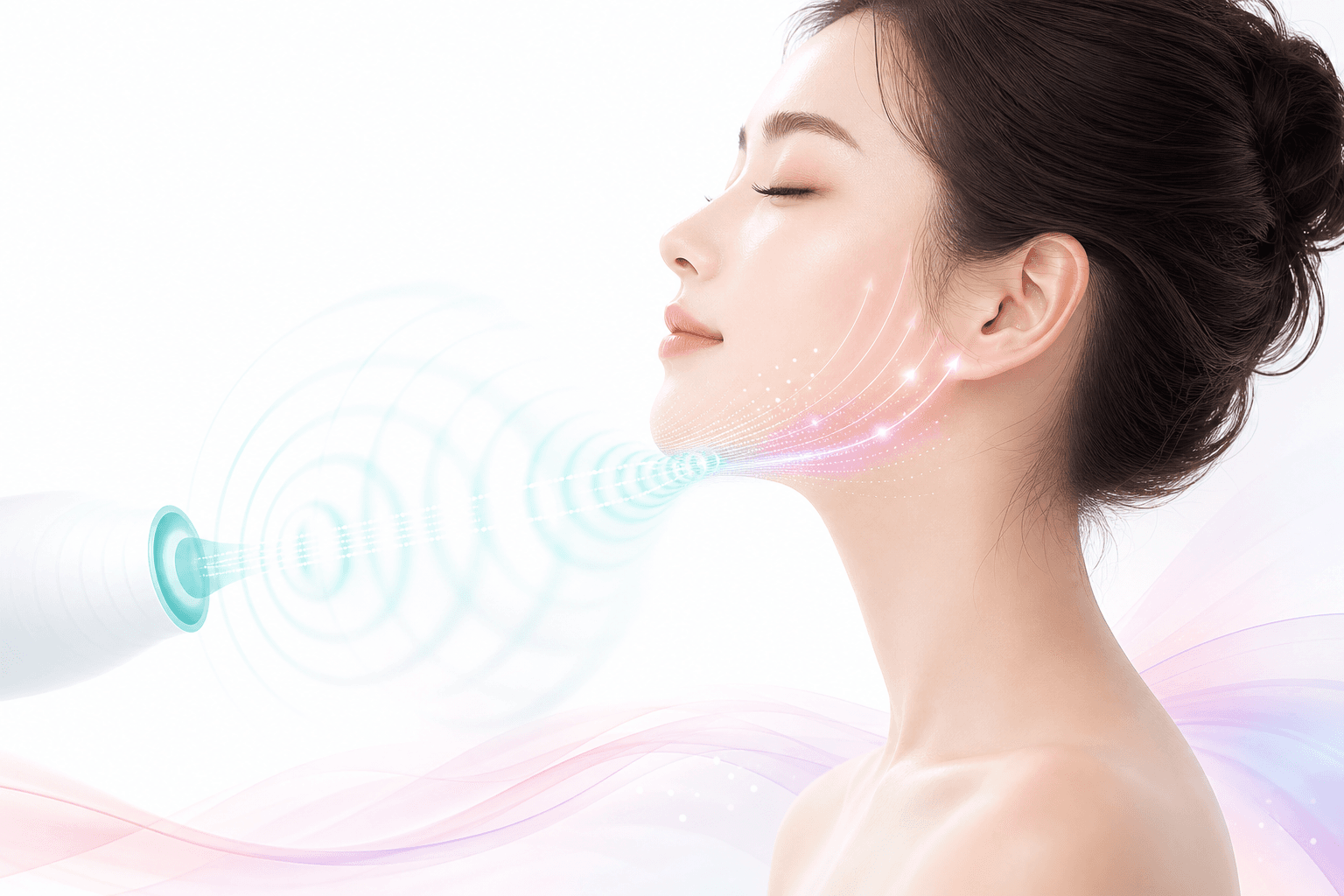
If You've Started Noticing Wrinkles Around Your Eyes
The fine lines that gather around your eyes whenever you smile in the mirror, the creases that look even more pronounced when makeup settles into them. The eye area is the part of the face where change appears first, and fastest. That's why so many people search for ways to "improve eye wrinkles," yet it's hard to find organized information on "why they form" and "which kind of care suits my particular wrinkles."
Today, from the perspective of Cellinique on Dosan-daero in Gangnam, we'll walk through why wrinkles form around the eyes and, by cause, the care and treatment directions worth considering. To start with the conclusion: eye wrinkles don't come from a single cause, so it's rare for "one treatment" to be the answer. Understanding which type your own eye area falls into is the first step.
3-line summary
1. The skin around the eyes is known to be the thinnest area of the face (about 1 mm or less, depending on the spot), so it's the first to feel the effects of declining collagen, UV exposure, and facial movement, and wrinkles tend to appear early.
2. Eye wrinkles are a mix of dynamic wrinkles from facial-muscle (orbicularis oculi) movement and static wrinkles from skin aging and photoaging, so the direction to consider differs by type (for example, botulinum toxin targets dynamic wrinkles, while skin boosters work toward skin texture and regeneration).
3. The degree of change, how long it lasts, and whether a treatment is suitable vary widely with each person's skin condition, age, and lifestyle, so the same result cannot be guaranteed, and the specifics are decided in a prior consultation.
1. Why Do Eye Wrinkles Form? — 3 Causes
To care for eye wrinkles properly, the first step is understanding "why they form." The causes of eye wrinkles fall broadly into three categories, and in most cases all three work together.
1) Thin skin — why change shows here first
The skin around the eyes (the eyelids and the area surrounding the eyes) is known to be the thinnest area of the face. Thin skin means it's quicker to feel the effects of moisture loss, declining collagen, and external irritation. The reason you notice change around the eyes first, even at the same age, comes down to this structural trait.
2) Facial movement — dynamic wrinkles
Every time you blink, smile, or frown, the muscles around the eyes (the orbicularis oculi) move repeatedly. As this repeated movement accumulates, it creates wrinkles that fan out toward the outer corners of the eyes, the fine lines people commonly call "crow's feet." Wrinkles that become more pronounced when you make an expression are called dynamic wrinkles.
3) Aging and UV — static wrinkles
As we age, the skin's collagen and elastin gradually decline, and when accumulated UV exposure (photoaging) is added to this, the skin's own elasticity and texture change. Wrinkles that remain visible even at rest, regardless of expression, are called static wrinkles. Static wrinkles often don't improve much by managing the facial muscles alone, and in many cases the skin's own texture and elasticity need to be considered as well.
💡 Fact-check ✓
Sources: J Clin Med 2025 (PMID 39860540) · World J Otorhinolaryngol Head Neck Surg 2023 (PMID 37780673)
- In the academic literature, periorbital aging is described as a multifactorial process in which genetics, environment, and lifestyle interact, with UV exposure as a major contributing factor; mechanical stress such as repeated facial expression is also reported as a cause (J Clin Med 2025, PMID 39860540).
- The periorbital skin is known to be the thinnest area of the face, which is why aging changes are described as appearing relatively early.
- For eye-wrinkle care, minimally invasive methods such as botulinum toxin, fillers, and energy-based treatments are reported to be considered (J Clin Med 2025, PMID 39860540).
- Causes, types, and the degree of change vary from person to person.
| Category | Dynamic wrinkles | Static wrinkles |
|---|---|---|
| When they show | Pronounced when smiling or making expressions | Visible even at rest |
| Main cause | Repeated movement of facial muscles such as the orbicularis oculi | Skin aging, declining collagen, photoaging |
| Direction usually considered | Toward managing facial-muscle movement | Toward addressing skin texture, regeneration, and elasticity |
In one line
Eye wrinkles form from thin skin, facial movement, and aging/UV working together. The care direction to consider differs depending on whether dynamic or static wrinkles predominate.
2. What Care and Treatments Are Considered by Cause?
At Cellinique, rather than focusing on "famous treatments," we look at the direction based on the type of your own eye wrinkles. The following is general guidance to aid understanding; whether a treatment is actually suitable and how it proceeds are decided in a prior consultation.
1) Lifestyle care — the foundation of all care
Whatever treatment you're considering, basic care such as sun protection, moisturizing, not smoking, and adequate sleep should go alongside it. The eye area in particular is greatly affected by UV, so the habit of reducing UV exposure with sunscreen, sunglasses, and the like is known to help slow the progression of static wrinkles. That said, it's difficult to reverse already-established wrinkles through lifestyle care alone.
2) Botulinum toxin (Botox) — for dynamic wrinkles caused by expression
For dynamic wrinkles driven mainly by facial-muscle movement, such as the fine lines at the outer corners of the eyes that become pronounced when you smile, botulinum toxin is considered. Botulinum toxin works by temporarily reducing the activity of the facial muscles so that wrinkles become less pronounced.
However, because botulinum toxin is focused on dynamic wrinkles, it's difficult to improve static wrinkles, which are visible regardless of expression, in the same way. The eye area is especially thin and delicate, so dosing and placement design have a large effect on the result, and the effect is a temporary improvement that gradually returns after a certain period.
💡 Fact-check ✓
Sources: U.S. FDA (BOTOX® Cosmetic indication) · AbbVie official statement
- The botulinum toxin product (BOTOX® Cosmetic, onabotulinumtoxinA) is FDA-approved for moderate to severe lateral canthal lines (crow's feet, the wrinkles at the outer corners of the eyes) associated with orbicularis oculi activity (2013).
- Its mechanism is described as temporarily reducing the activity of the muscle beneath the skin so that expression-driven wrinkles become less pronounced (AbbVie official).
- The effect can be limited for static wrinkles unrelated to expression, and the improvement is temporary, gradually returning over time.
- The effect, duration, suitable area, and dose vary from person to person and are decided in a prior consultation.
3) Skin boosters — toward skin texture and regeneration
When the concern is the skin's own texture and elasticity regardless of expression, that is, static wrinkles and skin quality, the skin-booster category is sometimes considered. Among these, Rejuran i is a PN (polynucleotide) skin booster known as an option designed with low viscosity to suit thin, delicate areas like the eyes. PN, the core ingredient of Rejuran, is extracted and purified from salmon DNA.
A skin booster is not a treatment completed right after the procedure; it's a direction in which you observe gradual change over time, so its approach differs from botulinum toxin. If you'd like to learn more about Rejuran's mechanism and lineup, please also see the Complete Guide to Rejuran Healer.
💡 Fact-check ✓
Sources: Korea's MFDS medical-device approval (no. 14-825, 2014, PharmaResearch Co., Ltd.) · Medical Observer report
- Rejuran is a tissue-repair biomaterial made from PN (polynucleotide, derived from salmon DNA), and received Korea's MFDS medical-device approval (no. 14-825, 2014) (clinical literature reports a PN concentration of 20 mg/mL).
- Rejuran i was reported as a low-viscosity, high-spreadability option for thin areas such as the eyes, approved by Korea's MFDS (Medical Observer).
- Skin regeneration is a process that unfolds over time, so the degree of change and how long it lasts vary widely from person to person.
4) Others — energy-based, fillers, and more
When concerns beyond wrinkles are also visible, such as under-eye hollowing or shadowing, other directions like energy-based treatments or fillers may be considered together. That said, the eye area and under-eye are very delicate regions where treatment selection and design are demanding, so what suits you must be assessed in a prior consultation.
| Concern type | Direction usually considered |
|---|---|
| Eye wrinkles that become pronounced when smiling (dynamic) | Botulinum toxin direction |
| Skin texture, elasticity, wrinkles independent of expression (static) | Skin boosters (e.g., Rejuran i) and other regeneration/texture directions |
| Accompanied by volume factors such as under-eye hollowing or shadowing | Fillers, energy-based, etc. — assessed individually in consultation |
3. Eye-Wrinkle Care: What Do We Check First?
At Cellinique, during an eye-wrinkle consultation we look at the following first.
- Identifying the wrinkle type — we check whether the wrinkles appear only when making an expression (dynamic), are visible even at rest (static), or are a mix of both.
- Skin condition and lifestyle — we review skin thickness, dryness, UV exposure, history of past treatments, and medications taken.
- Designing the care direction — we consider together whether to settle on a single treatment, or to combine care of different directions in the right sequence.
- Setting realistic expectations — on the premise that the degree of change and how long it lasts vary widely from person to person, we set a plan that isn't overdone.
The eye area is a region where not only the result but safety in particular matters, so it's realistic to look first at "what suits my eye type" rather than "which treatment is famous."
4. Safety and Precautions
Eye treatments are genuine medical procedures, so we can't tell you "there is no risk at all." Because the area is thin and delicate, prior assessment and placement design matter all the more.
Commonly reported reactions
- Temporary swelling, redness, or bruising at the treatment site (most recover within a few days)
- In the case of botulinum toxin, rarely eyelid drooping or puffiness — related to dosing and placement design
- In the case of injection treatments, small nodularity or tenderness at the injection site (usually settles over time)
- Very rarely, infection or allergic reaction
What you must tell us before treatment
- Pregnancy or breastfeeding (including if you're planning to)
- Medications you're taking (especially anticoagulants, antiplatelets, immunosuppressants)
- History of allergies (including the anesthetic lidocaine)
- History of neuromuscular disorders (especially important when considering botulinum toxin)
- Active infection, history of autoimmune disease, other treatments received recently
The standards for side effects, emergency response, contraindications, and infection management that apply across all treatments can be found on the Cellinique treatment safety guide page. If you're considering an eye treatment, we recommend giving it a look before your procedure.
5. How Cellinique Approaches Eye Wrinkles
Cellinique is an anti-aging dermatology clinic on Dosan-daero in Gangnam-gu. We see thin, delicate areas like the eyes as places where treatment selection and placement design strongly affect the stability of the result. According to Cellinique, Medical Director Dr. Kim Gun-woo personally handles everything from the prior consultation through the treatment and follow-up checks.
Eye wrinkles are often a mix of types, so there are times when care of different directions needs to be designed in the right sequence. Having the same medical team carry the flow through is advantageous for observing the recovery process, and thanks to the Dosan-daero location in Gangnam, return visits and follow-up checks after the consultation tend to be convenient as well.
Frequently Asked Questions (FAQ)
Q1. Why do eye wrinkles form faster than in other areas?
The skin around the eyes (the eyelids and the area surrounding the eyes) is known to be the thinnest area of the face. Thin skin feels the effects of moisture loss, declining collagen, and UV quickly, and when repeated facial movements such as blinking and smiling are added, change tends to appear earlier than in other areas. That said, the rate of progression varies widely with each person's skin condition and lifestyle.
Q2. Will Botox (botulinum toxin) get rid of eye wrinkles entirely?
Botulinum toxin is focused on dynamic wrinkles caused by facial-muscle movement, so while it's considered for the fine lines that become pronounced when you smile, it's difficult to improve static wrinkles visible regardless of expression in the same way. The effect is also temporary and gradually returns over time. Rather than "getting rid of everything," it's a direction considered partially according to the type. Your own wrinkle type is checked in a prior consultation.
Q3. How is a skin booster (Rejuran i) different from Botox?
The direction is different. Botulinum toxin works toward managing facial-muscle movement (dynamic wrinkles), while a skin booster like Rejuran i works toward addressing skin texture, regeneration, and elasticity (static wrinkles and skin quality). That's why the two directions are sometimes combined in the right sequence. For Rejuran's mechanism and lineup, please see the Complete Guide to Rejuran Healer. Which direction suits you is decided in consultation.
Q4. How long does the effect last?
It depends on the treatment direction, and above all it varies widely with each person's skin condition, age, and lifestyle, so the same duration can't be guaranteed for everyone. Botulinum toxin is a temporary improvement that gradually returns over time, while a skin booster is a direction in which you observe gradual change over time. We recommend being fully briefed in a prior consultation on what you can expect.
Q5. Isn't at-home care (eye cream, sun protection) alone enough?
Basic care such as sun protection and moisturizing is known to help slow the progression of static wrinkles, so it's a foundation that should go alongside whatever treatment you have. That said, in many cases it's difficult to reverse already-established wrinkles through lifestyle care alone. It's realistic to maintain basic care and, when needed, consider treatments suited to the type alongside it.
Q6. Aren't eye treatments dangerous?
The eye area is thin and delicate, so placement design and prior assessment matter more than in other areas. Temporary swelling, redness, or bruising can occur, and in the case of botulinum toxin, eyelid drooping is rarely reported. We can't tell you "there is no risk at all," so please let us know in advance during the consultation about pregnancy or breastfeeding, medications taken, and any history of allergies or neuromuscular disorders.
Q7. Can I just come in for a consultation?
Of course. Because the care direction for eye wrinkles differs by type, we recommend first understanding your own eye type through a consultation and then deciding. If you'd like a consultation only, regardless of whether you proceed with treatment, feel free to reach us at 02-6203-3434 or via KakaoTalk. (We'll go over consultation fee details when you inquire.)
In Closing
Eye wrinkles are wrinkles of mixed origin, formed by thin skin, facial movement, and aging/UV working together. That's why it's rare for "one treatment" to be the answer, and understanding whether your own eye area is primarily dynamic or primarily static is the first step in care. What matters isn't a famous treatment, but whether that direction actually suits your own eye type and goals.
At Cellinique (Dosan-daero, Gangnam), Medical Director Dr. Kim Gun-woo personally handles everything from the first consultation through the treatment and follow-up checks. If wrinkles around your eyes are on your mind, start with a consultation where you can comfortably talk through your own eye type and skin condition. If you're curious about the skin-booster direction, see the Complete Guide to Rejuran Healer; for the common safety standards, see the Cellinique treatment safety guide.
Please note
- Individual variation: results, durability, and suitability vary with each person's skin condition, age, and lifestyle, and the same result cannot be guaranteed.
- Possibility of side effects: treatments carry the possibility of side effects such as temporary erythema and swelling, and contraindications may apply, so these are confirmed in a prior consultation.
✅ Fact-check report
The medical information in this article was verified against the following sources:
1. J Clin Med 2025 (PMID 39860540) — "Periocular Aging Across Populations and Esthetic Considerations: A Narrative Review": periorbital aging is a multifactorial process involving genetics, environment, and lifestyle, with UV as a major factor; minimally invasive treatments such as botulinum toxin, fillers, and energy-based options are considered · pubmed.ncbi.nlm.nih.gov
2. World J Otorhinolaryngol Head Neck Surg 2023 (PMID 37780673) — "Periorbital rejuvenation in the clinic: A state-of-the-art review": causes of periorbital aging and clinical care options
3. U.S. FDA · AbbVie official — FDA approval of BOTOX® Cosmetic (onabotulinumtoxinA) for lateral canthal lines (crow's feet, the wrinkles at the outer corners of the eyes) associated with orbicularis oculi activity (2013); mechanism: temporarily reducing the activity of the muscle beneath the skin
4. Korea's MFDS · Medical Observer report — Rejuran medical-device approval (no. 14-825, 2014, PharmaResearch Co., Ltd.), PN (derived from salmon DNA) ingredient; Rejuran i is a low-viscosity option for thin areas such as the eyes · nedrug.mfds.go.krKey verified items: ✓ eye-skin thickness and the multifactorial nature of aging ✓ dynamic/static wrinkle distinction ✓ botulinum toxin FDA lateral-canthal-lines indication, mechanism, and dynamic-wrinkle limitation ✓ Rejuran/Rejuran i PN ingredient and Korea's MFDS approval ✓ individual variation and side effects stated. Effect and duration are expressed conservatively, and clinically unverified figures were not asserted. Cellinique's operating approach is described according to the clinic's own guidance.
Medical disclaimer
This content is intended to provide general health information; individual diagnosis, treatment suitability, and expected results must be decided through a prior consultation with a specialist. All medical treatments carry individual variation and the possibility of side effects.
Cellinique consultation and booking
2F and B1, Yeonseung Building, 228 Dosan-daero, Gangnam-gu, Seoul
Phone 02-6203-3434
Hours Mon-Fri 10:00-19:00 / last Saturday of each month 10:00-16:30