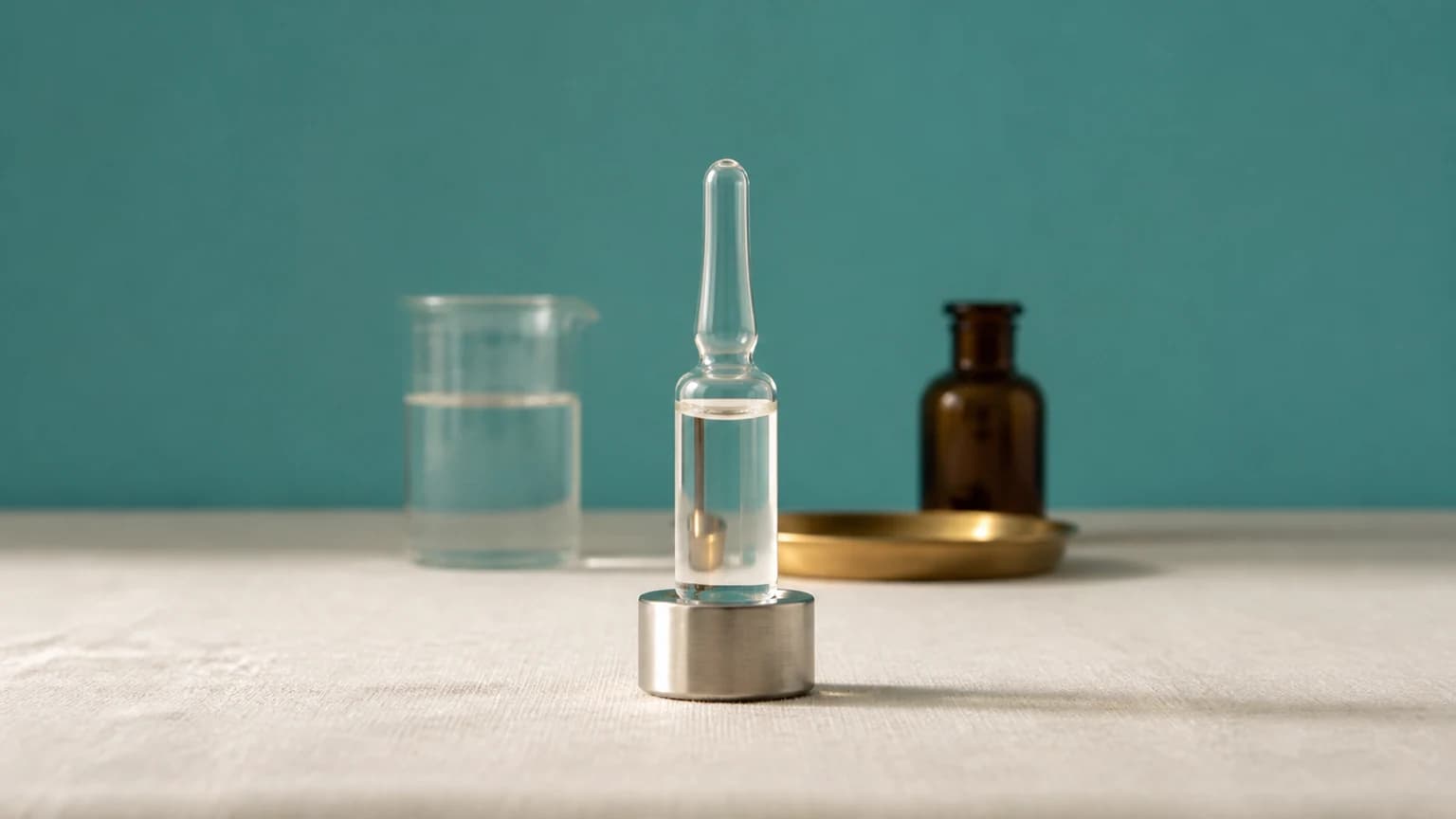
KLOSOME is a branded skin booster reviewed in consultations on skin texture and hydration. The manufacturer presents it as a product that uses exosomes, the small particles that cells send outward.
3-line summary
1. KLOSOME is a branded product that EHLBIO launched as a concept combining Klotho and exosomes.
2. Cosmetic advertising restricts wording that could be mistaken to mean the product contains human-derived exosomes, so the classification of today's vial is confirmed on documents.
3. On the day, it is applied to the consulted area after cream anesthesia, and redness, swelling, and bruising at injection sites are observed first.
How the manufacturer presents KLOSOME
The manufacturer's official page presents KLOSOME as a skin booster combining Klotho and stem-cell exosomes. Phrases about whitening, regeneration, or returning to younger skin in one session are marketing, and are not carried over as written.
Materials collected by dermatology researchers center on cell-free topical use or placement in the skin as preliminary application. Contents differ by product, and dose and session-count standards have not yet been aligned. General information continues in the exosome treatment guide.
The name is similar to liposome, which causes confusion. The manufacturer describes it as a concept of particles that cells send out, not as an artificial lipid-membrane carrier. Product information on the treatment page can be confirmed in the KLOSOME skin booster treatment information.
Cosmetic advertising restricts expressions that could be mistaken to mean the product contains stem cells or exosomes from the human body. Wording that states a source outside the human body, such as plant or milk, is left as an exception. This restriction is guidance for cosmetic labeling and advertising. Whether today's vial used at the clinic is a topical cosmetic, or an item authorized for injection, is distinguished by product documents.
Same-day process and recovery
The treatment information page states that it is applied by injection after consultation. The manufacturer's published protocol includes a setup that uses a laser and a needle roller together. Combining a laser can make redness last longer, so the same-day combination is decided according to skin condition and schedule.
| Step | Details |
|---|---|
| Consultation | Skin condition, treatment history, medications, classification of today's vial |
| Anesthesia | Cream anesthesia, then wait until the cream spreads |
| Application | Injection or topical application to the area set in consultation |
| Soothing | Same-day soothing care such as a cold compress |
After application, needle marks, redness, and swelling are common. Bruising and tenderness rarely follow, and infection and allergic reactions have also been reported. For the next day, postpone vigorous cleansing, saunas, and alcohol, and skip exfoliants and retinoids. Use sun protection from the day of treatment. Shared precautions can be confirmed in the procedure safety information and the injectable skin booster consent checklist.
When looking at it alongside Rejuran and Juvelook
The three names come up together in the consultation room because all are compared as skin boosters placed in the skin. The criterion for choosing is today's material, not a popularity ranking. The same duration number is not attached to all three products.
| Item | KLOSOME | Rejuran | Juvelook |
|---|---|---|---|
| Material | Exosome-concept branded product | PN (polynucleotide) | PDLLA (polylactic acid) and hyaluronic acid |
| What to check in consultation | Classification documents for today's vial | PN ingredient information | Collagen-stimulating booster information |
| Same-day discomfort | Redness and swelling at the anesthetized and treated area | Injection-site reaction | Injection-site reaction |
Whether to receive them on the same day is decided after seeing whether injection sites overlap and how much recovery time is available. Rejuran materials can be read separately in the Rejuran Healer guide, and Juvelook materials in the Juvelook complete guide.
Questions to ask about today's vial
If you look at the vial label together in the consultation room and confirm the following in order, that day's procedure is decided.
- □ Product name and manufacturer of today's vial
- □ Whether this product is a topical cosmetic, or an item authorized for injection
- □ Method of application (manual injection, needle roller, or combined laser)
- □ Pregnancy or breastfeeding, active infection, anticoagulants or immunosuppressants, history of tumor
- □ Whether to proceed on the same day as Rejuran or Juvelook, or to leave an interval
Frequently asked questions
Q1. Is KLOSOME a procedure that places stem cells?
According to the manufacturer's information, it is a product that uses particles that cells send out. The documents differ from a program that injects cells whose numbers were increased by culture.
Q2. Does the procedure hurt?
Cream anesthesia is applied first. A pricking sensation and tenderness may remain if a needle or needle roller is used, and same-day redness and swelling often appear before pain.
Q3. How many sessions?
The number of sessions is set to the skin response and the goal. The manufacturer's promotional phrase ‘returns in one session’ is not a basis for the consultation plan.
Q4. Can it be received on the same day as Rejuran?
Because the materials differ, some plans are designed for the same day. If injection sites overlap, swelling also overlaps, so a plan that leaves an interval is reviewed as well.
Q5. Who should not receive it?
If you have pregnancy or breastfeeding, active infection, use of anticoagulants or immunosuppressants, ingredient allergy, or a history of tumor, disclose this first. Suitability is decided by that day's condition.
Results, duration, and suitability vary with individual skin condition, age, and lifestyle, and the same outcome cannot be guaranteed.
Procedures may cause temporary redness or swelling, and contraindications may apply, so please confirm these during your consultation.
This article is general information and does not replace individual medical care. Please confirm diagnosis and treatment suited to your condition during a consultation.
Source materials
- da Costa Pereira Cestari M et al. (2026), Int J Dermatol: MSC-Derived Secretome and Exosomes in Dermatology: Mechanisms, Therapeutic Opportunities, and Scientific Challenges-A Narrative Review (PMID 40751329)
- Korea's MFDS: Cosmetics Labeling and Advertising Management Guidelines (guidance for industry, revised 2025-01-21)
- EHLBIO: KLOSOME official page (Klotho & Klosome)
Related reading
Discuss options for your current needs
We review your current health and prior procedures before explaining appropriate options and their limits.