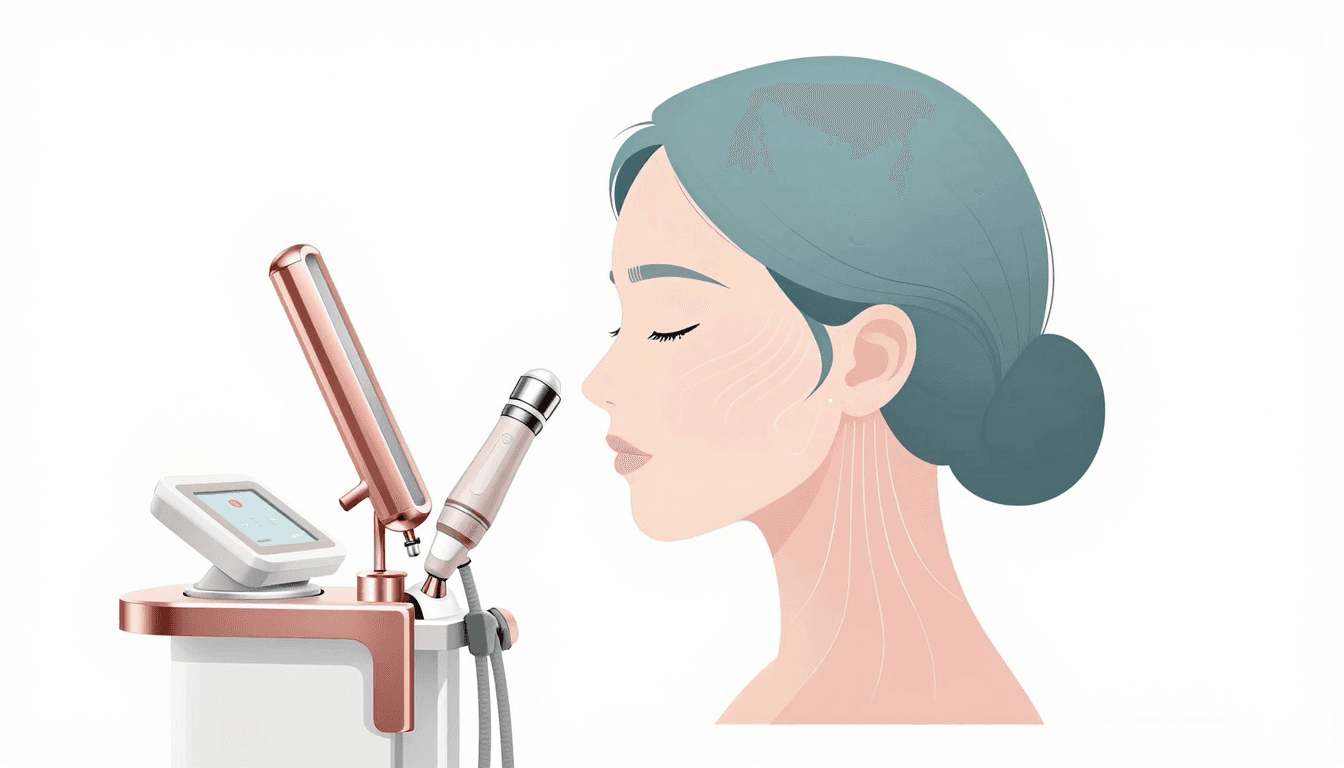
For Those Curious About Tuneface
When you start looking into lifting treatments, you may come across the name "Tuneface." It is often introduced as a kind of "lifting laser," but if you ask exactly what it does and how it works, you'll find that clear information is surprisingly hard to come by.
Let's clarify one thing from the outset. Although Tuneface is sometimes grouped with "lasers" in its name and in advertising copy, technically it is not a light-based (laser) procedure — it is a lifting and firming treatment that uses radiofrequency (RF) and ultrasound energy together. In this article, Dr. Kim Gun-woo, Medical Director of Cellinique on Dosan-daero in Gangnam, explains how he approaches Tuneface consultations, how the procedure is carried out, and what you should know about its principles, expected changes, and safety standards.
3-line summary
1. Tuneface is not a laser (light) procedure. It is a lifting and firming treatment that uses radiofrequency (RF) and ultrasound together to deliver thermal energy into the dermis and stimulate collagen contraction and neogenesis.
2. The device is based on Alma's Accent Prime platform from Israel. It is described as using unipolar radiofrequency combined with ultrasound to deliver heat across multiple skin depths.
3. Outcomes, duration of results, and suitability vary considerably based on skin condition, age, and lifestyle, and the same results cannot be guaranteed for everyone. The specific treatment plan is determined during a prior consultation.
1. What Is Tuneface? — The Principle of RF + Ultrasound
Tuneface is a lifting and firming treatment that uses radiofrequency (RF) and ultrasound energy in combination. While it is sometimes introduced under the "laser" label, it operates on a fundamentally different mechanism from laser procedures that use light energy. Unlike lasers that target pigment or blood vessels with light, Tuneface works by heating the dermis with thermal energy to stimulate collagen.
The mechanism works as follows. Unipolar radiofrequency penetrates the dermis and causes water molecules within the tissue to vibrate; the frictional heat generated in this way warms the dermis. Collagen is understood to contract at a certain temperature, and that stimulus then induces new collagen synthesis over time. Ultrasound is added to deliver heat across multiple skin depths. That is why Tuneface is more realistically described as a treatment where you expect both an immediate sense of tightening right after the session and a gradual collagen-driven change over the following weeks.
💡 Fact-check ✓
Sources: Alma (Accent Prime manufacturer) official product information · Cross-verified against multinational treatment clinics
- Tuneface is not a laser (light) procedure. It is a radiofrequency (RF) + ultrasound treatment based on Alma's (Israel) Accent Prime platform.
- The core modalities are unipolar radiofrequency (manufacturer-stated 40.68 MHz range) and ultrasound (UltraSpeed). The technology is described as using dielectric heating to warm the dermis across multiple depths, inducing collagen contraction and neogenesis.
- Outcomes and duration of results vary by individual and are not guaranteed.
In short, the word "laser" associated with Tuneface is merely a colloquial marketing term. The accurate understanding is that its mechanism is thermal stimulation based on radiofrequency and ultrasound.
| Category | Tuneface (RF + Ultrasound) | Conventional Laser Treatment |
|---|---|---|
| Energy source | Radiofrequency (RF) + ultrasound (thermal energy) | Light (laser) |
| Primary target | Dermal heating for collagen contraction and neogenesis (firmness and lifting) | Varies by target — pigment, vessels, surface, etc. |
| How changes appear | Immediate tightening + gradual change over several weeks | Varies with treatment purpose |
One-line summary
Tuneface heats the dermis with radiofrequency and ultrasound to stimulate collagen — a lifting and firming treatment. How it proceeds, whether it is suitable, and how long effects last all differ from person to person and are decided during a prior consultation.
2. Tuneface at a Glance
| Item | Information |
|---|---|
| Treatment category | RF + ultrasound-based lifting and firming treatment (not a laser) |
| Base device | Alma Accent Prime platform (Alma, Israel) |
| Core modalities | Unipolar radiofrequency + ultrasound (UltraSpeed) |
| Primary action | Dermal heating to stimulate collagen contraction and neogenesis (firmness and contour) |
| Anesthesia | Generally non-invasive; often performed without anesthesia (guidance based on condition) |
| Downtime | Generally short; temporary redness or warmth possible with individual variation |
| Pattern of perceived changes | Immediate tightening + gradual change over several weeks; significant individual variation |
| Recommended sessions and interval | Determined individually during prior consultation |
| Consultation and treatment | Dr. Kim Gun-woo personally conducts all consultations and procedures |
| Examples requiring careful consideration | Pregnancy or breastfeeding; active infection at treatment site; internal metal or electronic medical devices (e.g., pacemakers); autoimmune conditions; keloid tendency — all evaluated during prior consultation |
※ The above is general information. Whether Tuneface is suitable for you and the specific treatment approach are determined only through a prior consultation. Individual differences in skin condition and health status affect both suitability and experienced outcomes.
3. What Concerns Prompt Consideration of Tuneface?
Tuneface is not recommended for everyone. During consultations, it is typically considered for patients who mention the following kinds of concerns.
If you have these concerns
- You are bothered by reduced firmness or sagging along the facial contour compared to before
- You are prioritizing non-invasive lifting without surgery or significant downtime
- You are also thinking about improving skin texture and fine lines at the same time
- You are approaching skin management as a long-term firmness maintenance plan rather than a one-off result
That said, having these concerns does not automatically mean Tuneface is the right answer. It is simply one of the options to be reviewed during consultation. Actual suitability is determined individually at the prior consultation.
Conversely, caution is warranted in these cases
- Pregnancy, breastfeeding, or planning to become pregnant
- Active infection or inflammation at the treatment site
- Internal electronic medical devices such as pacemakers, or metal implants in the treatment area
- Keloid or hypertrophic scarring tendency, or history of autoimmune conditions
- Recent energy-based treatment to the same area, or currently in recovery
If any of the above applies to you, please let us know at the prior consultation. We will confirm whether treatment is possible and, if needed, suggest alternative management approaches.
4. How Does the Procedure Flow?
At Cellinique, Tuneface is carried out in the following sequence. Since the design of energy delivery depth, power output, and recovery management all affect outcomes and safety, we aim to keep the process straightforward and stable.
- Prior consultation and skin assessment — Dr. Kim Gun-woo personally reviews skin condition, degree of laxity, treatment history, medications, presence of internal medical devices, and lifestyle. Whether Tuneface is appropriate is usually determined at this stage.
- Treatment area and design — We review which areas would benefit from firmness and contour improvement, as well as combinations and sequencing with other treatments.
- Recovery and scheduling review — We schedule the procedure based on available downtime.
- Treatment application — The RF and ultrasound handpiece is applied to each area at individually adjusted power and depth. (Output and delivery depth are individually designed based on area and condition.)
- Post-care and next session guidance — Post-procedure precautions, recovery checkpoints, and, if needed, the interval for a subsequent session are explained individually.
💡 A patient's perspective — Some patients on their first visit say: "Because I was told in advance that collagen changes take time, I wasn't anxious when the immediate change wasn't dramatic." That said, recovery and change patterns vary considerably between individuals, so please feel free to contact Cellinique whenever anything comes up.
5. How Is Downtime and Recovery Managed?
As a non-invasive treatment, Tuneface generally involves a short downtime. However, because it uses thermal energy, temporary redness or a warm sensation can occur, and recovery varies with individual healing capacity and lifestyle.
Commonly expected reactions right after treatment
- Temporary redness or warmth at the treatment site
- Mild swelling or a feeling of tightness (usually subsides over time)
- Temporary dryness or dullness
- Occasionally mild bruising or tenderness
First 24 hours after treatment
- Avoid irritating skincare products, heat, and vigorous cleansing
- Keep the skin well moisturized
- If you notice any change in your condition, please contact Cellinique
First week after treatment
- Avoid thermal stimulation such as saunas, steam rooms, and intense exercise
- Apply sunscreen thoroughly
- Reducing alcohol and smoking where possible is advisable
The key point is that because recovery patterns differ between individuals, it is best to review the recovery process and treatment schedule in advance together.
6. Safety Standards and Precautions
Tuneface is still a medical procedure, so it would be inaccurate to say there is no risk whatsoever. In particular, because it involves thermal energy, the design of output and delivery depth and post-procedure monitoring are important — which is why Cellinique allocates generous time to consultation, area design, and follow-up.
💡 Fact-check ✓
Sources: Korean MFDS Nedrug · FDA accessdata · Alma official product information
- Alma's radiofrequency (Accent RF) device family, on which Tuneface is based, has confirmed FDA 510(k) clearance (premarket notification) history. (※ "510(k) clearance" is a distinct process from "FDA approved/PMA," so this article does not assert "FDA approval.")
- The precise 510(k) number for "Accent Prime" and its Korean MFDS product approval status could not be directly confirmed from primary databases, so this article does not assert that information and describes it only within general guidance scope.
- Even as a non-invasive procedure, temporary redness, warmth, and swelling are possible side effects. Rare cases of burns, pigment changes, and blisters have been reported. The frequency and recovery pattern vary by individual.
Commonly reported reactions
- Temporary redness, warmth, or mild swelling at the treatment site (most resolve within a short time)
- Temporary dryness or tightness; occasionally mild bruising
- Very rarely, superficial burns, blistering, or temporary pigment changes
When to contact Cellinique immediately
- Severe pain, prolonged warmth, or persistent redness at the treatment site
- Signs suggestive of burns such as blistering or weeping
- Pigment changes that darken or spread over time
- Signs of a suspected allergic reaction (hives, difficulty breathing, etc.)
Information to share before treatment
- Pregnancy or breastfeeding (including if you are planning to become pregnant)
- Internal electronic medical devices such as pacemakers, or metal implants
- Current medications (including photosensitizing and anticoagulant drugs)
- Keloid or hypertrophic scarring tendency, active infection, or history of autoimmune conditions
- Recent energy-based treatment to the same area (interval and sequence adjustment may be needed)
Safety standards that apply universally to all treatments — including side effects, emergency response, contraindications, and infection management — are detailed on the Cellinique Treatment Safety Information page. If you are considering Tuneface, we recommend taking a look before your consultation.
7. Tuneface vs. Other Lifting Treatments
"Would Tuneface or a different lifting treatment be better for my skin?" — a frequently asked question. The criterion is not "which treatment is more popular" but "which mechanism fits my skin." The table below is general information for understanding the differences; individual suitability is determined during consultation.
| Category | Tuneface | High-Intensity Focused Ultrasound (HIFU) | Pigment and Texture Laser |
|---|---|---|---|
| Energy source | RF + ultrasound (area heating) | Focused ultrasound (point/line thermal coagulation) | Light (laser) |
| Primary action | Dermal heating for firmness and contour | Deep-layer thermal coagulation for lifting | Targeted improvement of pigment, texture, etc. |
| How changes are perceived | Immediate tightening + gradual change over weeks | Gradual lifting change | Varies with treatment purpose |
| Recommended sessions and interval | Varies by treatment type, area, and individual condition — determined during prior consultation | ||
There is no need to commit to a single treatment. A combination of treatments with different mechanisms, arranged in the right sequence, can also be explored during consultation. However, we do not concentrate multiple thermal energy treatments on the same area; instead, we plan the interval and sequence for safe design.
8. How Cellinique Operates Tuneface
Cellinique is an anti-aging clinic on Dosan-daero in Gangnam. For a procedure like Tuneface, where the design of output, delivery depth, and treatment area has a major influence on outcomes and safety, we believe that consistent medical supervision and thorough device expertise make a significant difference in the reliability of results.
Dr. Kim Gun-woo personally handles everything from the initial consultation through treatment and post-procedure monitoring. Because consistent adjustment of power and area by a single physician who has tracked the patient's skin condition helps with predictability and safety management, we operate this way. (Details of qualifications and training history are available during consultation.)
Being on Dosan-daero also means that follow-up visits and post-checks are convenient — an advantage for a treatment like Tuneface, where changes need to be observed over time.
Frequently Asked Questions (FAQ)
Q1. Is Tuneface a laser treatment?
No. Although it is sometimes introduced as a "lifting laser" in its name or in advertising, Tuneface is not a light (laser) procedure — it is a lifting and firming treatment that uses radiofrequency (RF) and ultrasound energy together. Because it works by delivering heat into the dermis to stimulate collagen, it operates on a fundamentally different mechanism from lasers that target pigment or blood vessels.
Q2. How does Tuneface produce its effects?
Unipolar radiofrequency causes water molecules in the dermis to vibrate, generating frictional heat. That heat is understood to contract collagen and then stimulate new collagen synthesis over time. Ultrasound is added to deliver heat across multiple skin depths. The degree and speed of change vary considerably between individuals.
Q3. When can I start noticing changes?
An immediate sense of tightening and smoothness typically comes first, followed by collagen-driven changes over the subsequent weeks. However, because results vary considerably based on skin condition, age, and lifestyle, the same outcome cannot be guaranteed for everyone. Please discuss what to realistically expect for your own skin during a prior consultation.
Q4. How long do the effects last?
Duration varies based on skin condition, care habits, and the progression of aging. Because the treatment is based on collagen changes, effects tend to appear gradually and diminish slowly — but it is difficult to state a fixed number of months. Results are highly individual and not guaranteed, so the timing for maintenance and repeat sessions is planned together during consultation.
Q5. Is one session enough, or are multiple sessions needed?
The recommended number of sessions and interval differ based on skin condition, goals, and treatment area. A multi-session approach with set intervals may be mentioned, but there is no single correct number of sessions — individual plans are explained during the initial consultation.
Q6. Is it painful? Is anesthesia needed?
As a non-invasive treatment, many patients describe it as feeling like a warm sensation, and it is often performed without anesthesia. That said, sensitivity to discomfort and the specific treatment area can affect the experience, so please speak up during the session if you are uncomfortable and we will adjust the output.
Q7. What are the side effects and precautions?
Given the thermal energy involved, temporary redness, warmth, dryness, and mild swelling are possible. Occasionally mild bruising occurs, and very rarely superficial burns, blistering, or temporary pigment changes have been reported. If you are pregnant or breastfeeding, have internal electronic medical devices or metal implants, active infection, a keloid tendency, or autoimmune conditions, please let us know during the prior consultation. Whether and to what degree these occur varies between individuals.
Q8. Can I just come in for a consultation?
Of course. Because the design of Tuneface varies based on treatment area, goals, and the sequence relative to other treatments, we strongly encourage you to understand it fully through consultation before deciding. Whether or not you proceed with treatment, you are welcome to inquire by calling 02-6203-3434 or via KakaoTalk. (Consultation and treatment fees vary based on individual condition and design and are explained during the consultation.)
Closing
Tuneface is often mistaken for a laser because of its name, but it is actually a non-invasive lifting and firming treatment that heats the dermis with radiofrequency and ultrasound to stimulate collagen. What matters is not the name or the treatment's profile, but whether its mechanism genuinely fits your skin and goals.
At Cellinique (Gangnam, Dosan-daero), Dr. Kim Gun-woo personally handles everything from the initial consultation through treatment and post-procedure monitoring. If you are interested in Tuneface, we recommend starting with a consultation to talk through your skin condition and management goals in a relaxed setting. General safety standards can be found on the Cellinique Treatment Safety Information page.
✅ Fact-check completion report
The key medical information in this article was verified from the following sources.
- Alma (Accent Prime manufacturer) official product information — Modalities of the Tuneface base device (unipolar RF + ultrasound) and collagen stimulation principle via dielectric heating
- Cross-verified across multinational treatment clinics — Confirmation that Tuneface is an RF/ultrasound (not laser) procedure based on the Accent Prime platform
- FDA accessdata — FDA 510(k) clearance history confirmed for Alma's radiofrequency (Accent RF) device family. "510(k) clearance" is distinct from "FDA approved (PMA)," and the precise 510(k) number for "Accent Prime" could not be confirmed from primary databases, so this article does not assert "FDA approval" and describes it only within the scope of "RF family clearance history."
- Korean MFDS (MFDS/Nedrug) product approval — Product approval details for "Accent Prime / Tuneface" in Korea could not be confirmed from primary databases, so the article does not assert domestic approval.
- Verified items: treatment identity (not laser; RF/ultrasound), mechanism, side effects, individual variation disclosure. Efficacy figures, duration of results, exact approval numbers, and overseas approval status were not stated definitively due to individual variation and unconfirmed data.
Medical disclaimer
This content is intended for general health information purposes only. Individual diagnosis, treatment suitability, and expected outcomes must be determined through a prior consultation with a specialist. All medical procedures carry individual variation and the possibility of side effects.
Cellinique consultation and reservations
2F & B1, Yeonseung Building, 228 Dosan-daero, Gangnam-gu, Seoul
Phone 02-6203-3434
Hours Mon–Fri 10:00–19:00 / Last Saturday of each month 10:00–16:30