
TUNE FACE
Tune Face is a facial RF treatment, not a laser, that holds skin with suction and heats the dermis. A Korean study gave 5 sessions 2 weeks apart.
WHAT WE CHECK IN CONSULTATION
Those concerned about laxity on the forehead, cheeks, or under the chin
Those who want to discuss a double chin or lower-face contour without surgery
Those who can schedule several visits 2 weeks apart
Those who want an explanation before choosing between laser and RF
TREATMENT OVERVIEW
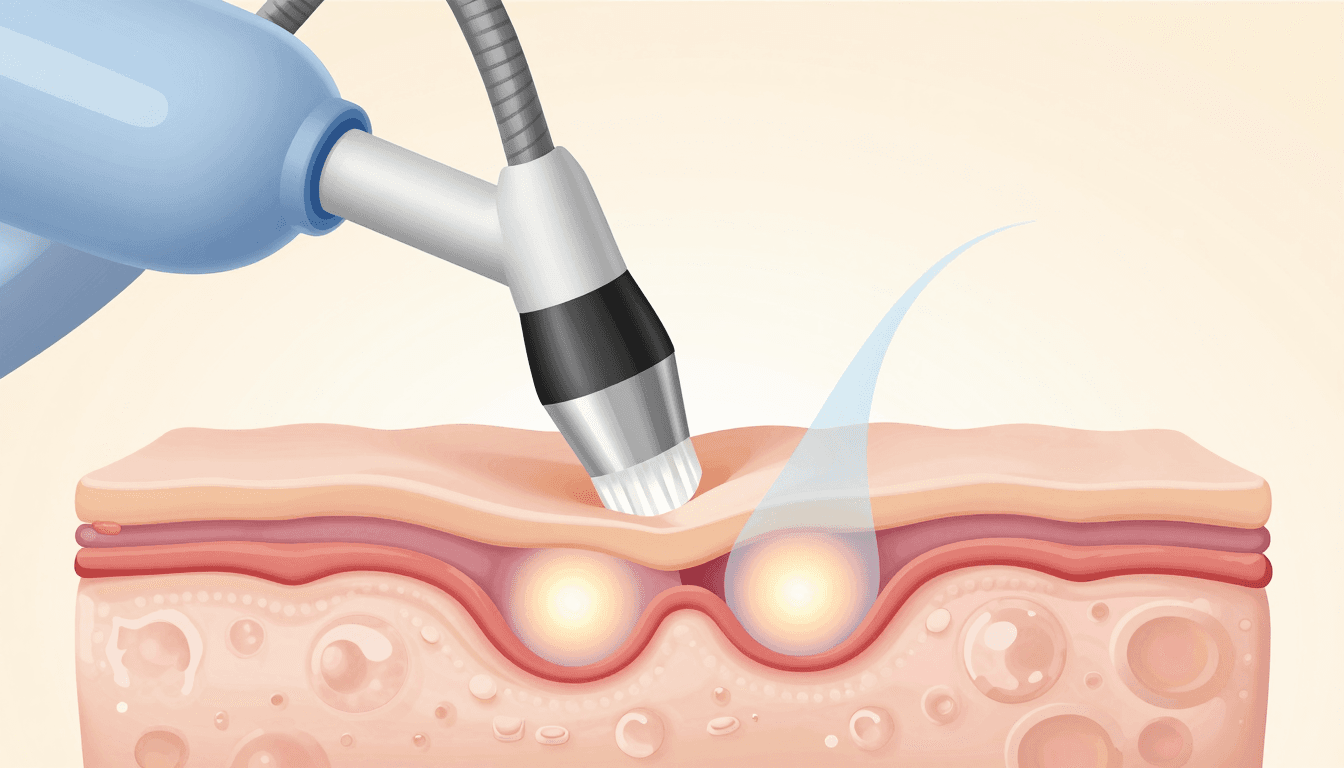
Tune Face uses a tip that holds the skin in place with suction while it delivers radiofrequency (RF) heat to the dermis. This heat is described as contracting collagen fibers and then stimulating new collagen to form.
A Korean study gave 5 sessions, 2 weeks apart, and assessed facial sagging 3 months after the last one. Results at 6 months or 1 year were not measured, so there is no data on how long changes last beyond that.
View detailed information
Tune Face is a facial treatment that holds the skin with suction while delivering radiofrequency (RF) heat to the dermis to address skin laxity. It is often listed with laser treatments, but the energy it uses is RF, not light. In a Korean study, it was given 5 times, 2 weeks apart, without anesthesia.
What is Tune Face?
Tune Face is the name of a facial tip that connects to Accent Prime, a device made by the Israeli company Alma. The Accent Prime unit has separate RF and ultrasound tips. Tune Face is the RF tip presented for facial tightening, while the manufacturer designates the ultrasound tip for contouring small areas.
The description “a device that combines ultrasound and RF” refers to the whole unit. The energy that reaches the skin from the Tune Face tip is RF. Accent-family devices have been cleared by U.S. regulators for the non-surgical treatment of wrinkles.
How does RF heat work in the skin?
When RF heat reaches the dermis, collagen fibers are described as contracting first, followed by the formation of new collagen. The Tune Face tip sends this heat while suction pulls the skin up and holds it in place. Energy goes through the tip on the face alone, with no pad attached to the back.
Korean researchers examined skin tissue from 9 people who had completed 5 sessions, one month after the last session. Collagen bundles in the deeper dermis looked thicker than before treatment. You can read more about the study in Tune Face RF: How It Works and What the Research Shows.
How many sessions, and when are changes assessed?
The Korean study that assessed facial sagging used 5 sessions, 2 weeks apart. Participants were 14 women aged 32 to 80, and one physician treated the forehead, cheeks, and under the chin. This is a different schedule from RF treatments that are done in a single session.
Changes were assessed from photos taken 3 months after the last session. Two dermatologists scored the photos blinded. All 14 women were rated at least mildly improved, and half were rated moderately improved. A little over three in ten were rated markedly improved. Results at 6 months or 1 year were not measured, so this study cannot show how long changes last beyond that.
Note: This study observed 14 women without a comparison group. It does not mean the same results will occur for everyone.
At Cellinique, we do not simply apply the study schedule. We check the areas you want to treat and your skin condition, then adjust the number of sessions.
How long does it take, and does it hurt?
Cellinique estimates Tune Face treatment time at about 30-60 minutes. Pain was recorded in the same Korean study. Treatment was given without anesthesia, and all 14 participants rated pain during treatment as 0 on a scale of 0 to 10. If the heat feels strong during treatment, the power is adjusted.
Possible reactions and precautions
Temporary redness or swelling may occur after treatment. The Korean researchers monitored redness, swelling, and tingling, but the study does not record how many of these mild reactions occurred. No serious adverse events or facial fat loss were reported in the 14 participants.
After treatment, we explain redness, warmth, and when you can return to your routine, and we check your skin once the schedule is complete. If you plan to have lifting, laser, or skin booster treatments on the same area afterward, we first check where you were treated before and then decide the order.
How is it different from Thermage and Ulthera?
The difference is what energy is used and how it is delivered. Tune Face and Thermage both use RF but deliver it in different ways, while Ulthera uses ultrasound. These are differences in method, not a ranking.
| Treatment | Energy | Delivery and use |
|---|---|---|
| Tune Face | RF | Holds the skin with suction and delivers heat through the tip, with no pad |
| Accent Prime ultrasound tip | Ultrasound | Designated by the manufacturer for contouring small areas |
| Thermage | RF | A return pad is attached so the current passes through the body |
| Ulthera | Ultrasound | Focuses ultrasound deep beneath the skin |
What to ask at your consultation
Because one device has several tips, it helps to confirm first which tip is used, on which areas, and for how many sessions.
- □ Whether the tip used is the Tune Face RF tip or the ultrasound tip
- □ Which of the forehead, cheeks, and under-chin area will be treated
- □ How the number of sessions and the interval are planned
- □ Whether anesthesia is used, and how power is adjusted if the heat feels strong
- □ When and how changes will be assessed
- □ Your history of prior treatments such as fillers, Botox, or lifting
01
Suction RF tip
Suction pulls the skin up and holds it in place while RF heat is delivered to the dermis.
02
5 sessions, 2 weeks apart
A Korean study gave 5 sessions 2 weeks apart and assessed facial sagging 3 months later.
03
No anesthesia
The Korean study used no anesthesia, and every participant rated pain as 0.
TREATMENT PROCESS
Consultation
Facial contour concerns, skin laxity, and prior procedures are reviewed.
Preparation
The skin is cleansed and prepared according to the planned treatment area.
Energy-based treatment
Treatment is performed using the planned ultrasound/RF-based protocol.
Aftercare guidance
Possible redness, warmth, and return-to-routine timing are reviewed.
Before and After Treatment
Before treatment
During consultation, we review your current health, medications, allergies, pregnancy or breastfeeding status, and previous procedures.
Aftercare
Follow the procedure-specific guidance on irritation, heat, alcohol, exercise, and sun exposure, and contact the clinic if you notice an unexpected symptom.
Preparation and aftercare vary by procedure and individual health status. Please follow the instructions given during your consultation.
Consulting physician · Dr. Chris Gunwoo Kim · Director, Laboratory Medicine specialist
Frequently Asked Questions
Is Tune Face a laser?
No. It is an RF treatment, not a laser. Its goal differs from light treatments that target pigment: it delivers heat to the dermis to address skin laxity.
Does Tune Face hurt?
In a Korean study, all 14 participants rated pain during treatment as 0. No anesthesia was used. If the heat feels strong during treatment, the power is adjusted.
How many Tune Face sessions do I need?
The Korean study that assessed facial sagging gave 5 sessions, 2 weeks apart. This is a different schedule from RF treatments done in a single session.
How long do Tune Face results last?
The study checked results up to 3 months after the last session. Results at 6 months or 1 year were not measured, so there is no data on how long changes last after that.
Which areas can be treated with Tune Face?
The Korean study treated the forehead, cheeks, and under the chin. At Cellinique, people often come in to discuss lower-face contour, a double chin, or skin laxity.
Are Accent Prime and Tune Face the same thing?
Accent Prime is the device, and Tune Face is the facial RF tip that connects to it. The device also has an ultrasound tip, which the manufacturer presents separately for contouring small areas.
Can I combine Tune Face with Thermage or Ulthera?
There is no data on results when they are combined. The Korean study excluded people who had other rejuvenation treatments during follow-up. If you plan to have another treatment on the same area, we check where you were treated before and then decide the order.
Treatment Safety
For the shared standards on side effects, emergency response, contraindications, and infection control that apply to every Cellinique treatment, please refer to the Cellinique Treatment Safety Guide. This page covers information specific to this treatment.
View Treatment Safety GuideRelated Treatments
Explore other options in the same category that are often compared alongside this treatment.

Related guides
Guides that cover this treatment in more detail.
- Tune Face Treatment: Addressing Facial Firmness with RadiofrequencyTune Face uses radiofrequency heat, not laser light, to address facial firmness. See how it is done and what one study recorded after five sessions.
- Jowls: Why They Form and Which Non-Surgical Lifting Treatments Address ThemJowls form beside the mouth, on the jawline. See why that tissue sags, what Ulthera, Thermage FLX, and Tune Face address, and what lifting studies found there.

CELLINIQUE
Start your journey to timeless beauty today.