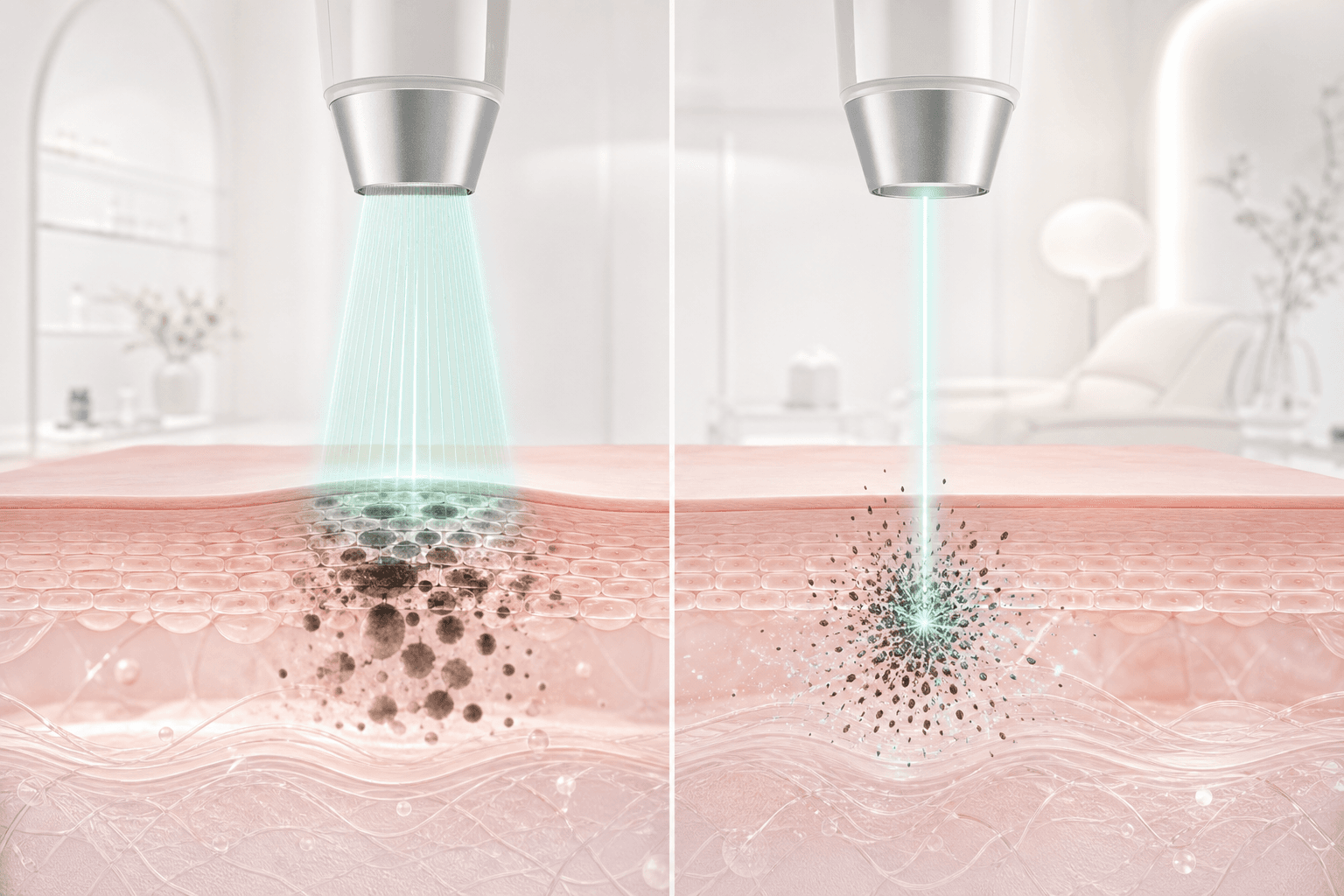
Re2O (Rituo) Effects: What Does the Evidence Actually Show?
When researching skin boosters and you come across "Rituo (Re2O)," you often end up facing the same question: "I've heard it fills the ECM directly rather than stimulating collagen production — is there actual evidence that it works?" The marketing language can sound impressive, but finding solid verified data is harder than expected, leaving many people unsure where to set their expectations.
This post is an in-depth analysis from Cellinique on Dosan-daero in Gangnam, breaking down Rituo's effects by evidence grade. Even within the same word "effect," we distinguish between what has been confirmed in peer-reviewed clinical trials, what remains at the preclinical (cell/animal) stage, and what exists only in manufacturer and marketing materials. If you are curious about the treatment process and downtime, please also visit our Rituo Skin Booster Complete Guide; for a direct comparison with stimulation-type boosters, see our Rituo vs. Rejuran Comparison Guide.
3-Line Summary
1. Rituo (Re2O) is a skin booster in the ECM-replenishment category that uses ECM (extracellular matrix) derived from human acellular dermal matrix (hADM). Unlike approaches that "stimulate and wait" for collagen production, its stated mechanism is to replenish already-structured ECM directly into the dermis. The original developer is L&C Bio and domestic supply is handled by Humedix; their supply agreement was signed in November 2024.
2. The evidence for its effects varies by grade. A 2026 peer-reviewed journal (International Journal of Molecular Sciences) published a split-face randomized, double-blind clinical trial (n=20, 20-week follow-up) reporting that the hADM-treated side showed greater improvement than the HA control in skin density, elasticity, wrinkle depth, pore area, and moisture metrics (p<0.05 at multiple time points). However, the sample is small and the data is short-term (20 weeks).
3. Specific compositional ratios such as "approximately 89% collagen," long-term durability data, and the exact regulatory classification and approval number from Korea's MFDS remain limited in publicly available primary sources, so we do not state them as established fact. Suitability and expectations vary significantly between individuals and are determined in a pre-treatment consultation.
1. Before Discussing Effects — What Does Rituo Actually Do?
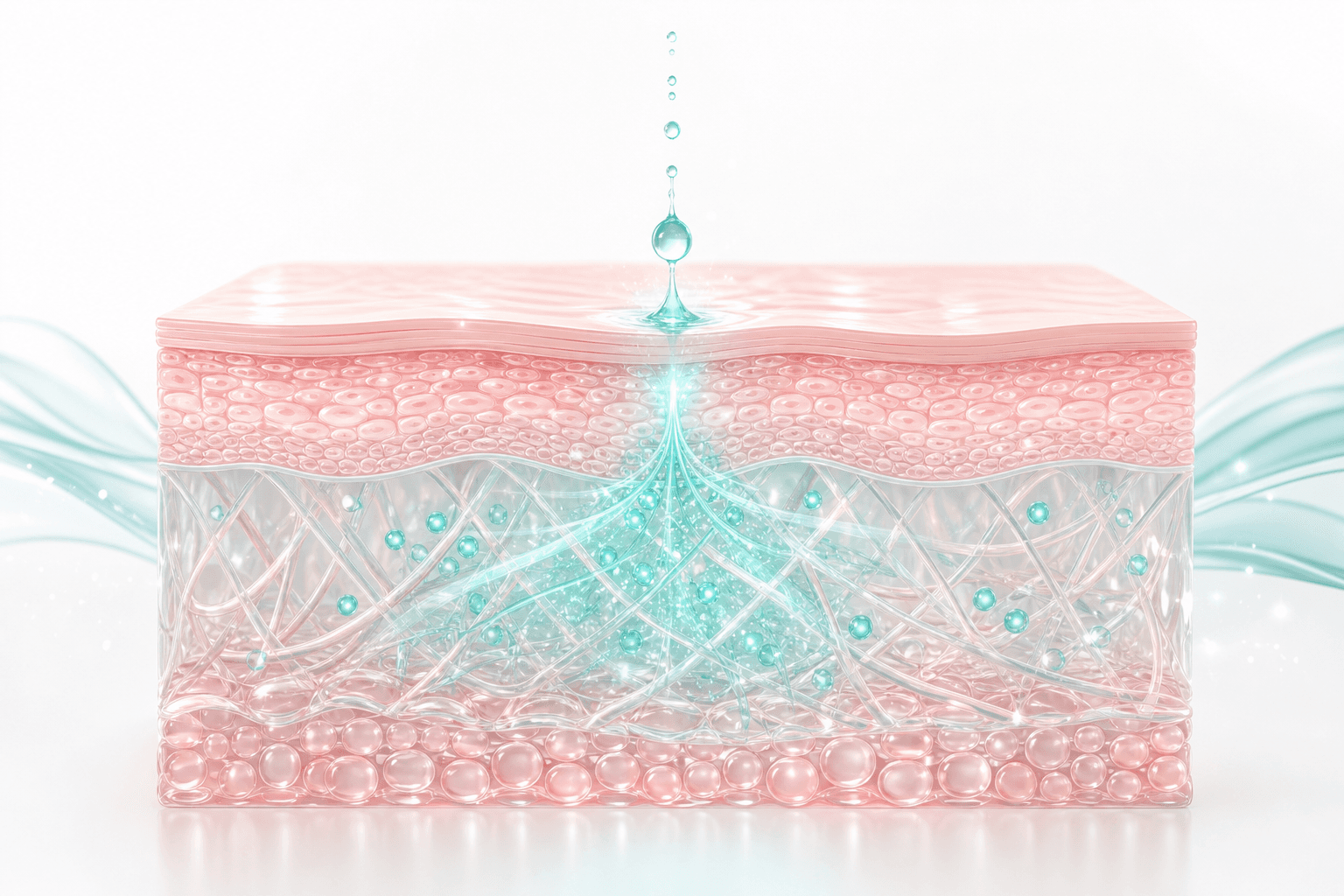
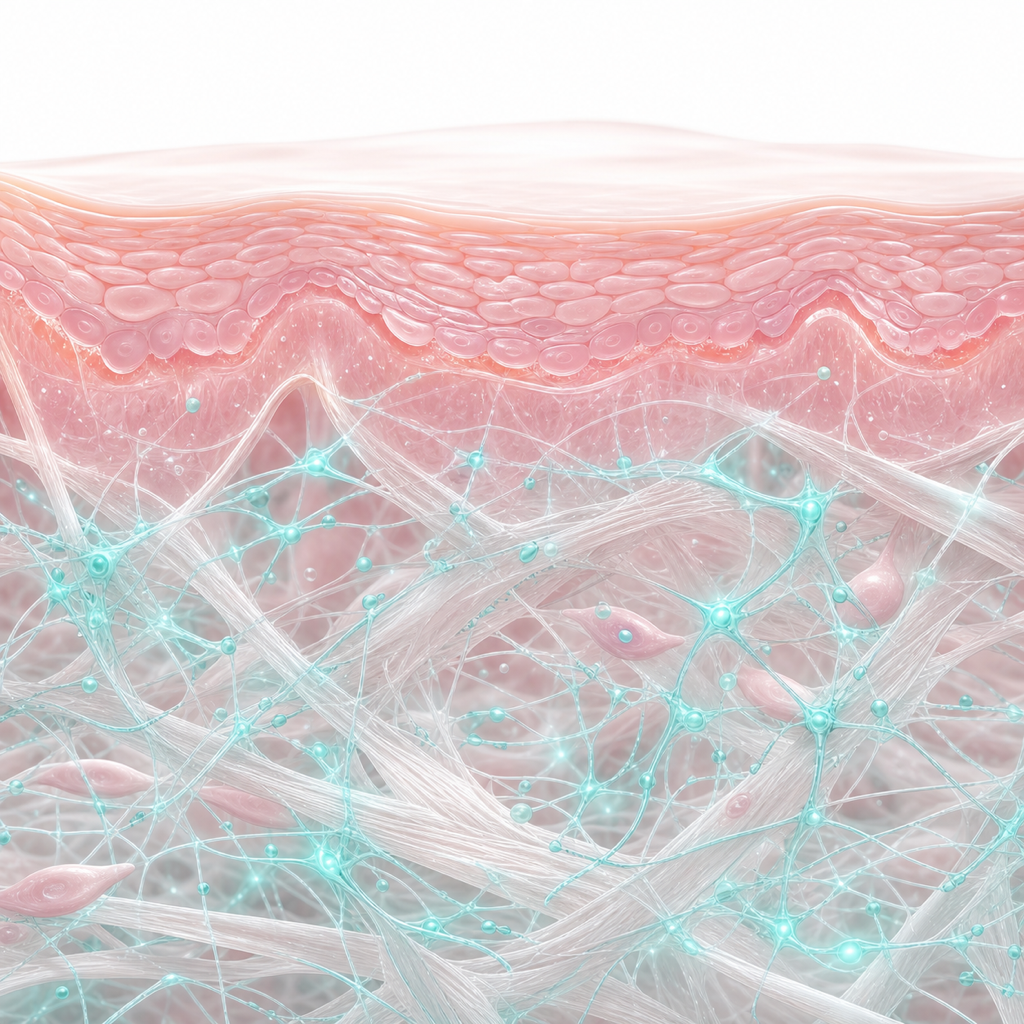
To evaluate its effects accurately, it helps to first understand what Rituo is designed to do. Rituo (Re2O) is a skin booster that uses ECM (extracellular matrix) derived from human acellular dermal matrix (hADM). The ECM is a mesh-like structure in the dermis that surrounds and supports cells, composed of components such as collagen, elastin, and GAGs (glycosaminoglycans). hADM is a material produced by removing cellular components — those that could cause immune rejection — from donated human skin tissue, leaving only the ECM framework.
The key distinction from conventional skin boosters lies in the direction of action. Many skin boosters work by delivering stimulation to prompt the skin to rebuild its own collagen, whereas Rituo is described as directly replenishing already-structured ECM components into the dermis. It is easy to understand as the difference between "waiting for collagen stimulation" and "filling with ECM directly." This means that when evaluating its effects, the relevant question is not "how strongly does it stimulate" but "what changes does the replenished ECM create as it integrates into the dermis."
One point to clarify upfront: a different mechanism of action does not imply superiority or inferiority. The claim that "filling directly is automatically better" goes beyond what the evidence supports. Which approach best suits your skin depends on your skin condition, concerns, and treatment history — and Cellinique views Rituo as one option among several, with suitability assessed in a pre-treatment consultation.
💡 Fact-check ✓
Source: L&C Bio / Humedix supply agreement press coverage (The Bioz News, 2024.11.18; Korea Economic Daily, Nov. 2024)
- Rituo (Elravie Re2O) is reported as a skin booster in the ECM-replenishment category using human acellular dermal matrix (hADM). The original developer is the human tissue regeneration company L&C Bio; domestic supply rights are held by Humedix, with the supply agreement concluded on 18 November 2024.
- L&C Bio's proprietary "Alloclean Technology" is described as preserving the three-dimensional structure of human tissue while removing cells and materials that trigger immune rejection.
- The approach is presented as replenishing "not only collagen but also ECM components," and individual experience of effects varies.
One-line summary
Rituo is a new-approach skin booster that directly replenishes ECM derived from hADM into the dermis. Its effects should be evaluated not by "stimulation intensity" but by "the changes the replenished ECM creates."
2. Evidence for Effects, Broken Down by Grade
Lumping all of Rituo's "effects" into one category makes it easy to misunderstand. At Cellinique, we view effect claims in three grades. Because the credibility of a statement depends entirely on which grade of evidence it comes from, the distinction matters.
| Evidence Grade | Type of data | Applies to Rituo |
|---|---|---|
| ① Peer-reviewed clinical | A randomized, blinded human trial published in an academic journal | Split-face clinical trial (n=20, 20 weeks): improvement reported in density, elasticity, wrinkles, pores, and moisture metrics |
| ② Preclinical (cell/animal) | Trends observed in cell or animal experiments — not directly transferable to human effects | Tendency of skin-derived ECM to support fibroblast migration and collagen/elastin expression |
| ③ Manufacturer/marketing materials | Figures from manufacturer or promotional materials — not yet independently verified | Certain specific compositional ratios such as "approximately 89% collagen," some durability expressions |
We will walk through each grade below. To state the conclusion first: Rituo recently added a Grade ① piece of evidence, moving beyond the category of "an emerging treatment with only preclinical support" — but there are still a notable number of items that remain at Grade ③.
3. Grade ① — What Did the Human Clinical Trial Show?
The most substantial piece of evidence in any analysis of Rituo's effects is a clinical trial published in 2026 in the peer-reviewed journal International Journal of Molecular Sciences. It was a split-face randomized, double-blind clinical trial evaluating injected particulated human acellular dermal matrix (phADM): Rituo (Elravie Re2O) was applied to one side of the face and hyaluronic acid (HA) to the other side of the same individual for a direct within-person comparison. Because the two sides of the same person were compared, this design reduces the influence of individual variation and is a relatively high-credibility approach.
The reported results show that the hADM-treated side demonstrated greater improvement than the HA control in skin density/volume, elasticity, wrinkle depth, pore area, transepidermal water loss (TEWL), and moisture across multiple time points (each metric at p<0.05). In the preclinical portion, fibroblasts were observed migrating into the implanted matrix and new collagen forming at the interface, along with a concentration-dependent increase in collagen and elastin synthesis.
💡 Fact-check ✓
Source: Int. J. Mol. Sci. 2026 (PMC12985180) — split-face randomized, double-blind trial + preclinical
- Design: split-face randomized, double-blind clinical trial comparing injected particulated hADM (phADM, Elravie Re2O, L&C Bio) versus HA control, n=20, 20-week follow-up (assessments at weeks 1, 4, 8, 12, 16, and 20).
- Outcomes: the hADM side showed greater improvement than HA in skin density, elasticity (weeks 4 & 20), wrinkle depth, pore area (from week 12), TEWL (weeks 8 & 20), and moisture (from week 8) (each p<0.05).
- Safety: no serious adverse events; mild reactions including transient erythema and minor swelling resolved spontaneously. However, the sample is small (20 participants) and the results are short-term (20 weeks) — generalization to long-term, large-scale outcomes is limited. Effects and durability vary between individuals.
This clinical trial changes the starting point for discussions about Rituo's effects. In contrast to a vague impression that it is "an evidence-free new treatment," at least in short-term metrics, a within-person left-right comparison reported superiority over HA. That said, Cellinique takes a step back here. A sample of 20 participants followed for 20 weeks represents "an initial clinical signal," not a confirmation that long-term effects are established. We therefore do not make claims like "it lasts a long time" or "you will definitely improve" on the basis of this result, but communicate only the accurate level: "positive signals have been reported in short-term metrics."
4. Grade ② — Preclinical Evidence Helps Explain "Why It Might Work"
Looking at clinical numbers alone makes it hard to understand "why those changes occur." The gap is filled by cell- and animal-stage preclinical evidence. The literature on skin-derived ECM materials reports that these materials show a tendency to support fibroblast survival and migration and to increase collagen and elastin expression in cell experiments. In animal implantation experiments, no marked immune response, systemic toxicity, or fibrous capsule formation was observed.
That said, it would be misleading to invoke this as direct "proof" of effects. Preclinical evidence represents category-level basic science and mechanism evidence for ECM materials — it does not establish the effects of Rituo as a specific product when used in humans. A cell dish and an actual dermis are different environments, and what worked well in animals is not guaranteed to replicate to the same degree in humans. Cellinique therefore uses preclinical data only to explain "why this treatment was designed this way" — never to leap to "the effects are guaranteed."
💡 Fact-check ✓
Source: J Microbiol Biotechnol 2025 (PMC12197817) · J Microbiol Biotechnol 2026 (PMC12828126)
- Skin-derived ECM materials (based on decellularized human dermis) show a tendency in cell experiments to support fibroblast migration, increase elastin expression, and increase procollagen I secretion, and promote wound closure (PMC12197817). No marked immune response or systemic toxicity was observed on animal implantation.
- Another study reported that skin ECM shows a tendency in cell experiments to act on ECM remodeling, moisture retention (HAS2), and melanin-related markers (PMC12828126).
- Both sources represent preclinical evidence at the cell/animal stage and are distinct from the establishment of effects in humans. Effects and durability vary between individuals.
5. Grade ③ — The "89% Collagen" Figure: How Much Should You Trust It?
Materials introducing Rituo frequently cite specific compositional ratios such as "approximately 89% collagen, approximately 3% elastin, approximately 0.4% GAG including HA, and other ECM components." The numbers look clean and precise, but to be candid, these ratios are primarily values presented in manufacturer and marketing materials.
Interestingly, the peer-reviewed clinical trial cited above (PMC12985180) describes the composition of the same material as "approximately 80% collagen, approximately 3% elastin, approximately 0.4% sGAG, residual DNA <50 ng/mg." "89% collagen" and "80% collagen" are different numbers depending on the source. Exact composition can vary by product, lot, and measurement method, and it is difficult to state a single marketing figure as an established fact.
We therefore do not assert a specific ratio in this post. What is certain in terms of direction is that Rituo uses a collagen-centered human-derived ECM structure. For the exact composition and specifications of the product you would receive, please confirm in a pre-treatment consultation — that is the most accurate approach. Cellinique's policy is not to state a single definitive figure on public pages when the evidence differs between sources.
💡 Fact-check ✓
Source: Int. J. Mol. Sci. 2026 (PMC12985180) composition description · Manufacturer/marketing materials (compositional ratios reserved, not asserted)
- The peer-reviewed clinical trial describes the material composition as approximately 80% collagen, approximately 3% elastin, approximately 0.4% sGAG, residual DNA <50 ng/mg. Meanwhile, marketing materials cite "approximately 89% collagen," meaning figures differ depending on the source.
- Exact compositional ratios can vary by product, lot, and measurement method, so we do not assert a single figure in the article.
- Confirm your own applicable composition and specifications in a pre-treatment consultation.
6. How Long Do Effects Last, and When Do They Appear — the Most Cautious Area
"How long do the effects last?" is the most frequently asked question and simultaneously the one hardest to answer definitively. The clinical trial above followed participants for 20 weeks (approximately 5 months) and reported improvement metrics within that period, but long-term, large-scale data on how long effects persist beyond that point remain limited in publicly available primary sources. This is a relatively recently introduced category, and more time is needed.
The way changes appear also differs from single-session treatments with immediate results. Changes mediated by ECM replenishment and subsequent fibroblast integration into the matrix are observed gradually over time. Cellinique therefore does not fix a number like "lasts X months" but rather guides clients through observing changes together over an appropriate period following treatment. The degree of change and duration of effect vary considerably depending on skin condition, age, and lifestyle patterns, and identical outcomes or fixed durations cannot be guaranteed for everyone.
7. Safety — How Should You View the Human Tissue Origin?
Safety is as important as efficacy. Because Rituo uses a material of donated human tissue (allogeneic) origin, the regulatory framework differs from conventional synthetic or HA fillers. In South Korea, such human tissue-derived materials are reportedly managed according to the Act on the Safety and Management of Human Tissue and Korea's MFDS management framework, as well as international standards (AATB, etc.). The core Alloclean Technology, designed to remove cellular and immune-rejection-causing components, is part of this safety management approach.
The safety signals reported in the clinical trial were relatively reassuring. The split-face trial reported no serious adverse events, and mild reactions such as transient erythema and minor swelling resolved spontaneously. However, stating that "human-derived means it is completely safe" is not appropriate. As with any injection procedure, temporary swelling, redness, and bruising can occur, and in rare cases, nodules, infection, or allergic reactions may be reported. If you are pregnant or breastfeeding, have an active infection, are taking anticoagulants or immunosuppressants, have an autoimmune condition, or have a known ingredient allergy, please be sure to disclose this in your pre-treatment consultation. The characteristics of human tissue-derived materials and the consent process are also covered in the consultation.
💡 Fact-check ✓
Source: Int. J. Mol. Sci. 2026 (PMC12985180) safety description · Korea Health Industry Development Institute (KHIDI) human tissue-related materials
- In the clinical trial (n=20, 20 weeks), no serious adverse events were reported; mild reactions including transient erythema and minor swelling resolved spontaneously. However, the sample is small, so rare adverse events cannot be fully assessed.
- hADM and other human tissue-derived materials are reportedly managed in South Korea according to the Act on the Safety and Management of Human Tissue and international standards (AATB, etc.) by MFDS-licensed processing facilities.
- Adverse events, contraindications, and individual variation exist for all procedures, and the characteristics of the material and the consent process should be covered during a consultation.
Common safety standards, emergency protocols, contraindications, and infection control applying to all procedures can be found on the Cellinique Treatment Safety Information page. If you are considering Rituo, we recommend reviewing it before your appointment.
8. How Does Rituo's Evidence Compare to Other Skin Boosters?
"Is Rituo more effective than Rejuran or other skin boosters?" is a frequently asked question, but Cellinique does not answer it as "one is better." Because the direction of action and the character of the evidence differ, the right framing is "which direction of care suits you." The table below is a general guide for understanding directional and evidential differences — not a ranking of superiority. Individual suitability is determined in consultation.
| Category | Rituo (hADM · ECM replenishment) | Rejuran (PN stimulation) | HA skin booster |
|---|---|---|---|
| Core approach | Direct ECM component replenishment | Skin regeneration and repair stimulation | Moisture and surface support |
| Material class | Human allogeneic ECM (hADM) | PN (polynucleotide, salmon DNA-derived) | HA (hyaluronic acid) |
| How changes appear | Gradual, observed over time | Gradual, observed over time | Relatively early hydration sensation |
| Recommended frequency / interval | Varies by area and individual condition — determined in a pre-treatment consultation | ||
For a direct comparison between Rituo and PN-type boosters, please see the Rituo vs. Rejuran Comparison Guide; for the full Rituo treatment process and downtime, see the Rituo Skin Booster Complete Guide. There is no need to commit to a single treatment, and combining treatments with complementary directions in a sequenced plan can also be explored in consultation.
9. Cellinique's Principles for Communicating About Rituo's Effects
Cellinique is an anti-aging dermatology clinic on Dosan-daero in Gangnam. For treatments like Rituo — a new category where evidence grades vary by specific item — it is especially important to distinguish "what has been confirmed as an effect" from "what is an expectation." Our policy is not to state figures definitively on public pages when the evidence is weak or when sources conflict, and to confirm exact product specifications and suitability through a consultation.
We therefore maintain continuity from the initial consultation through treatment and follow-up care. Because this is a treatment where effects need to be observed over time, having the same care team track the changes makes it easier to calibrate expectations realistically. Our location on Dosan-daero also makes it straightforward for clients to return for follow-up after their consultation — an advantage for treatments where effects are observed gradually over time.
Frequently Asked Questions (FAQ)
Q1. Has the effectiveness of Rituo been clinically validated?
Partially, yes. A 2026 peer-reviewed journal (Int. J. Mol. Sci.) published a split-face randomized, double-blind clinical trial (n=20) reporting that the hADM-treated side showed greater improvement than the HA control in skin density, elasticity, wrinkle depth, pore area, and moisture metrics (p<0.05 at multiple time points). However, with only 20 participants and a 20-week follow-up, this represents an "initial clinical signal," not an "established long-term effect." Cellinique therefore communicates only that "positive signals have been reported in short-term metrics."
Q2. Is the "89% collagen" compositional figure accurate?
It depends on the source. Marketing materials cite "approximately 89% collagen," but the peer-reviewed clinical trial describes the same material as "approximately 80% collagen, approximately 3% elastin, approximately 0.4% sGAG." Exact ratios can vary by product, lot, and measurement method, so Cellinique does not assert a single figure and instead covers exact composition in a pre-treatment consultation.
Q3. When do effects appear, and how long do they last?
Rituo is not a treatment that produces complete results immediately after the session; rather, it is described as a treatment where changes are observed gradually over time. The clinical trial tracked participants for 20 weeks and reported improvement within that period, but publicly available primary evidence on durability beyond 20 weeks remains limited. The degree of change and duration of effect vary considerably between individuals depending on skin condition, age, and lifestyle patterns, so identical outcomes or fixed durations cannot be guaranteed for everyone. Please discuss realistic expectations in a pre-treatment consultation.
Q4. If preclinical results look good, does that mean it works just as well in humans?
Not necessarily. The tendency of skin-derived ECM to support fibroblast migration and collagen/elastin expression has been reported in cell and animal experiments, but this is mechanistic evidence explaining why such effects might occur — not data establishing effects in humans. A cell dish and an actual dermis are different environments, and reproducibility is not guaranteed, so Cellinique does not use preclinical data as a basis for asserting effects.
Q5. Is it safe, given that it comes from human (allogeneic) tissue?
The key material in Rituo is human acellular dermal matrix (hADM), derived from donated human skin tissue that has been processed. In South Korea, such materials are reportedly managed according to the Act on the Safety and Management of Human Tissue, Korea's MFDS management framework, and international standards (AATB, etc.). The clinical trial also reported no serious adverse events, with mild reactions resolving spontaneously. However, we cannot say there is no risk at all — pre-treatment consultation, suitability assessment, and disclosure of potential adverse events are necessary. The material's characteristics and the consent process are also covered in the consultation.
Q6. Between Rituo and Rejuran, which is more effective?
This is a question we cannot answer with "one is better." The directions of action (direct ECM replenishment vs. collagen stimulation) and the character of the evidence differ, so the core question is not which is superior but which direction suits your skin. Depending on your situation, combining them in sequence may also be considered. For a detailed comparison, please see the Rituo vs. Rejuran Comparison Guide.
Q7. Can I just come in for a consultation?
Absolutely. Because Rituo's evidence grades vary by item, we encourage you to fully understand what has been confirmed versus what remains an expectation before making your decision. If you would like a consultation only, with no obligation to proceed with treatment, please contact us at +82-2-6203-3434 or via KakaoTalk. (Consultation and treatment fees vary by individual condition and treatment plan and will be discussed during the consultation.)
Closing
To summarize Rituo (Re2O)'s effects in one phrase: it is an "ECM replenishment treatment with a clear mechanism of action and positive signals reported in short-term clinical data." The addition of a 2026 peer-reviewed clinical trial moves it beyond the impression of a vague new treatment, but compositional ratios, long-term durability, and the exact regulatory classification remain areas where publicly available primary evidence is limited and where conservative communication is appropriate. What matters is not impressive language but distinguishing between what has been confirmed and what remains an expectation.
At Cellinique (Gangnam Dosan-daero), we maintain continuity from the initial consultation through treatment and follow-up, communicating effects honestly according to evidence grade. If you would like to know whether Rituo's effects are actually suited to your skin and goals, please start by sharing your skin condition and care objectives in a consultation. The full treatment process is in the Rituo Skin Booster Complete Guide; the comparison with stimulation-type boosters is in the Rituo vs. Rejuran Comparison Guide; and shared safety standards are on the Cellinique Treatment Safety Information page.
Please Note
- Individual variation: Results, durability, and suitability depend on each individual's skin condition, age, and lifestyle patterns, and identical outcomes cannot be guaranteed.
- Possibility of adverse events: All procedures carry the possibility of adverse events such as temporary erythema and swelling; there may be contraindications, which should be confirmed in a pre-treatment consultation.
✅ Fact-check Report
The medical information in this post has been verified against the following sources. Because Rituo's evidence grades vary by item, each item is expressed according to its grade:
1. Int. J. Mol. Sci. 2026 (PMC12985180) — Injected particulated hADM (phADM, Elravie Re2O, L&C Bio) vs. HA split-face randomized, double-blind clinical trial (n=20, 20 weeks): density, elasticity, wrinkle depth, pore area, TEWL, and moisture metrics improved vs. HA (each p<0.05); no serious adverse events; mild reactions resolved spontaneously; material composition approximately 80% collagen, 3% elastin, 0.4% sGAG, residual DNA <50 ng/mg; fibroblast infiltration and new collagen formation observed in preclinical portion · pmc.ncbi.nlm.nih.gov
2. The Bioz News (2024.11.18) · Korea Economic Daily (Nov. 2024) — L&C Bio (developer) / Humedix (domestic supplier) Elravie Re2O supply agreement; human acellular dermal matrix (hADM) application; Alloclean Technology; ECM replenishment approach
3. J Microbiol Biotechnol 2025 (PMC12197817) — Skin-derived ECM (decellularized human dermis) shows tendency in cell experiments to support fibroblast migration, elastin expression, and procollagen I secretion; no marked immune response or systemic toxicity on animal implantation (category-level preclinical evidence) · pubmed.ncbi.nlm.nih.gov
4. J Microbiol Biotechnol 2026 (PMC12828126) — Skin ECM shows a tendency in cell experiments to act on ECM remodeling, moisture retention (HAS2), and melanin-related markers
5. Korea Health Industry Development Institute (KHIDI) human tissue-related materials — hADM and other human tissue-derived materials are managed in South Korea according to the Act on the Safety and Management of Human Tissue and international standards (AATB) by MFDS-licensed processing facilitiesKey verified items: ✓ hADM / ECM replenishment definition ✓ Developer/supplier and agreement date ✓ Human split-face clinical trial (short-term) effects and safety ✓ Preclinical mechanistic evidence ✓ Regulatory framework under the Act on the Safety and Management of Human Tissue ✓ Individual variation and adverse event disclosures present. Items not yet possible to state definitively: ① Specific compositional ratios (marketing 89% vs. clinical 80% — conflicting sources; assertion withheld) ② Exact Korea MFDS regulatory classification and approval number (primary DB not confirmed publicly) ③ Long-term, large-scale durability data (publicly available primary evidence beyond 20 weeks is limited) ④ Large-scale multicenter clinical trial for Rituo as a single product (not yet established).
Medical Disclaimer
This content is provided for general health information purposes only. Individual diagnosis, procedure suitability, and expected outcomes must be determined through a consultation with a qualified physician. All medical procedures carry individual variation and the possibility of adverse events.
Cellinique Consultations & Appointments
2F, B1, Yeonsong Building, 228 Dosan-daero, Gangnam-gu, Seoul
Tel: +82-2-6203-3434
Hours: Mon–Fri 10:00–19:00 / Last Saturday of each month 10:00–16:30